
Inside Fonda Las Manzanitas
Inside Fonda Las Manzanitas, Central Mexico’s bright sunlight shines through artfully placed glass bottles embedded in the restaurant’s walls. The smell of warm sweet bread called conchas fills the air, and cups of freshly squeezed juice cast faint shadows across a table. The owner has placed thank-you notes on the tabletop under a glass cover. Hundreds are pressed against the glass, and hundreds more are in a binder left open at the table’s end. They contain messages of gratitude and congratulations, locals and travelers alike appraising their experience at this small traditional local eatery. Each of them makes the owner, Doña Mary, very proud.
Las Manzanitas is one of 26 along the Ruta de Sabor (Flavor Trail), an initiative to support small restaurants using sustainable methods led by long-time EcoAgriculture Partners collaborator Grupo Ecologico Sierra Gorda (GESG). Pati Ruiz Corzo, the GESG founder and director, visited Las Manzanitas years ago and offered to help transform what was then not much more than a tin shack. It would eventually become a sustainable and beautiful establishment fashioned from the local clay building material called adobe, equipped with a water catchment system, dining furniture, a refrigeration system, and a beautiful aesthetic that invites passersby to come in and become customers. Doña Mary’s family also sells apples and juice to locals and tourists from their orchards. While helping improve the restaurant, Pati shared tools for increasing the orchard’s yield and sustainability.
“Thank God for Miss Pati; she and the ecological group helped us here so much when we needed it. I am so thankful,” said Doña Mary.
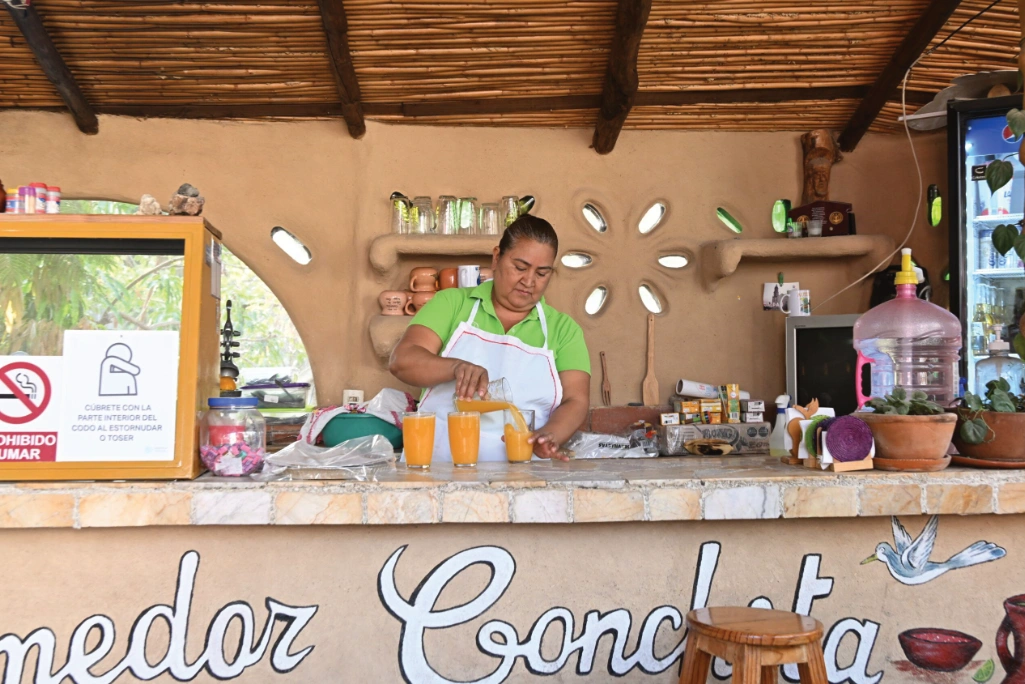
Irinea runs Comedor Conchita, a popular spot along the Ruta de Sabor, serving traditional foods and freshly squeezed orange juice.
GESG leads a movement of civil society organizations allied to conserve the Sierra Gorda landscape, an area of more than 383,000 hectares of mountainous forest, deserts, and canyons. The group leverages entrepreneurship and social participation to unite economic development with biodiversity conservation. Its work integrating sustainable practices in Sierra Gorda communities while finding ways to boost livelihoods is vital to restore the area’s unique ecosystems and help further people’s desire to live in greater harmony with nature. At EcoAg, we praise GESG for implementing Integrated Landscape Management (ILM), a way of managing a landscape through collaboration among different people within that space.
ILM supports businesses and the environment
The region’s Ruta de Sabor, a string of eateries that serve local and traditional foods, highlights ILM’s power. Often these businesses are run by women who partner with GESG to adopt sustainable methods, such as creating water catchment systems that deliver free and accessible water while helping recipients use fewer plastic jugs. The group also assists in installing dry toilets that use less water and building adobe structures from local clay, which regulates temperature indoors better than tin buildings and reduces carbon emissions by eliminating the need to transport other materials.
The Sierra Gorda landscape is an exemplary model of ILM, an inclusive land management approach where stakeholders solve shared problems and capitalize on new opportunities that reduce trade-offs and strengthen synergies among different landscape objectives. As one example, educating children about the importance of recycling is tied to efforts by schools to buy needed supplies by selling recycled goods while also better managing their waste.
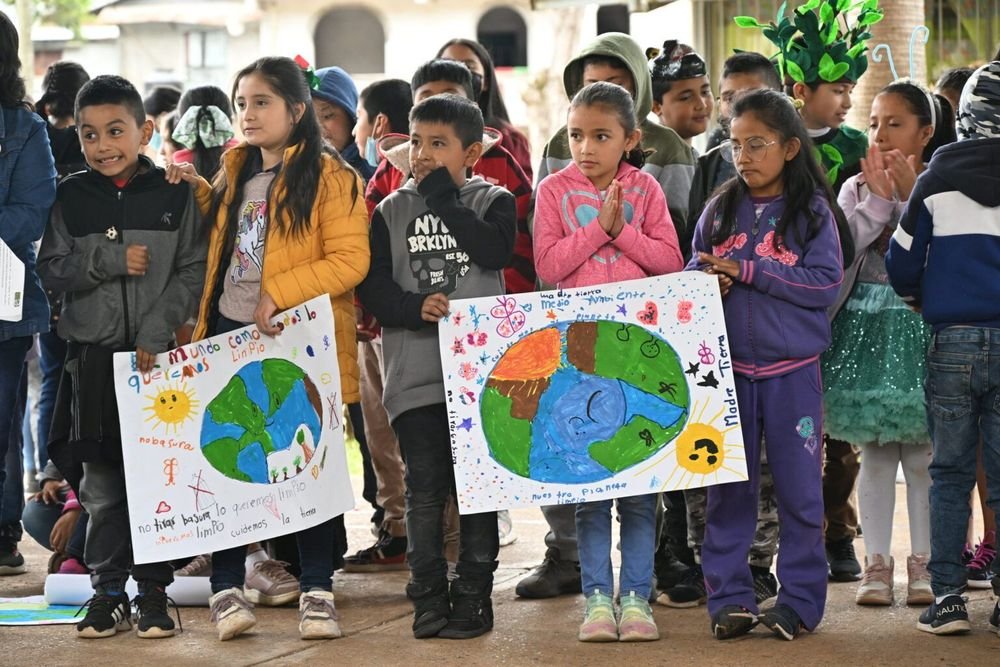
Students in the town of El Lobo present posters on keeping the Earth clean and healthy as part of the annual Fiesta de la Tierra, or Earth Festivals, hosted by GESG.
Another example is GESG’s work showing locals how to harvest wild produce such as oregano and pine nuts to eat and sell. This project benefits local economies while maintaining the health of these wild species and the soil. The group also aids gardeners, teaching them how to regenerate soils by planting ground cover to retain water and reusing organic materials to keep crucial microorganisms alive.
ILM positively impacts the livelihoods of Sierra Gorda residents whose income depends on selling wild crops and collecting and selling recyclables. Many other landowners can receive payments simply for conserving their land as part of a carbon-offsetting program to protect the region’s biodiversity (removing cattle from forest understory, maintaining fire breaks, participating in fire fighting brigades, and monitoring biodiversity). ILM produces a multiplier effect by including everyone in creating solutions for improving livelihoods, the economy, and human and environmental health.
Sierra Gorda’s climate resilience
In Doña Mary’s apple orchard, pink and white apple blossoms bloom abundantly in springtime. Her grandson helps irrigate the trees, and all her children and grandchildren will help harvest the small, yellow organic fruits come summer. It is cooler in this part of the Sierra Gorda, and the higher elevation usually makes for an excellent climate for growing apples. Over the past few years, though, a lack of rain has changed things. Less precipitation impacts the soil and diminishes bee populations, vital in pollinating the apple blossoms.
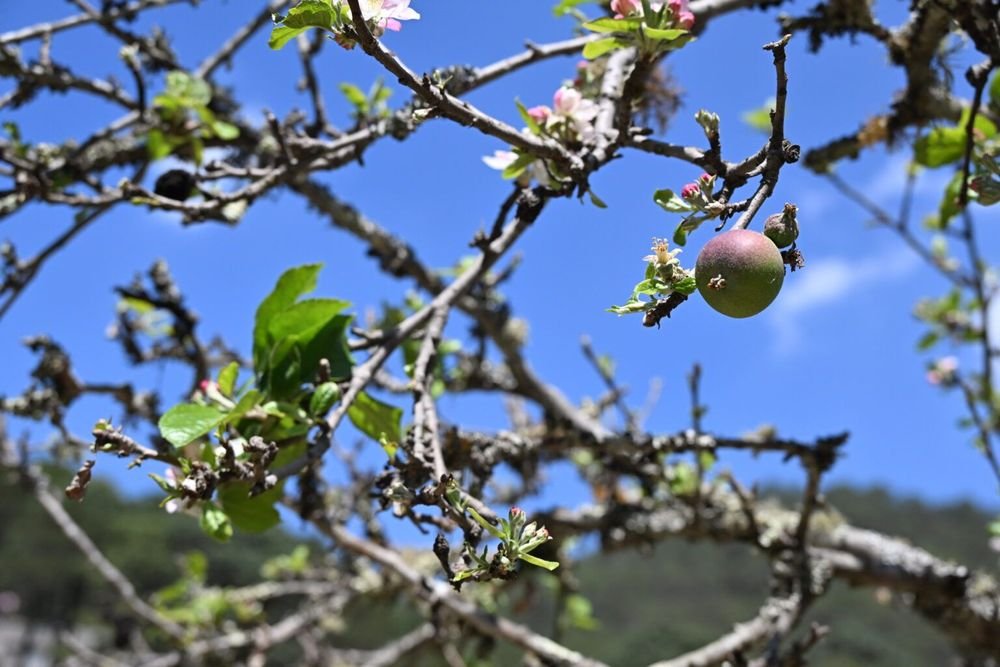
Apples grow in springtime at Doña Mary’s family orchard.
This is what climate change looks like in Sierra Gorda. Doña Mary and her family are doing what they can to mitigate its impacts. They found that leaving fallen branches as ground cover helps retain water, which is especially important during dry seasons to ensure they have apples to sell in the summer. Furthermore, human efforts at beekeeping have dropped in the Sierra Gorda as people are not rewarded with plentiful honey harvests. GESG is hosting beekeeping workshops to help keep pollinators and the local businesses that depend on them, like Doña Mary’s restaurant “Las Manzanitas,” alive. Margarita Pedraza Muñoz, a beekeeper, explained the importance of feeding bees with sugar and protein to protect them.
“It is about conservation, not only maintaining production. What the bees do is a great gift,” said Margarita.
A feeling of connectedness
Unlike the typical restaurant experience, the interconnectivity that ILM nurtures is evident when one eats along the Ruta de Sabor. With walls made of earth, a menu that changes to reflect seasonal produce and notable energy conservation efforts, people in the heart of this landscape take caring for the planet personally. In Doña Mary’s case, she sees how land management, climate, and the success of her restaurant and apple business are interconnected.
She hopes more bees return because they are crucial for the bounty of her apples, a staple in her restaurant that people have come to love. But above all, she is content, knowing GESG is here to support her, her family, and those who frequent her restaurant. She has a spirit of resilience, love, and a deep reverence for her roots in her communityfeelings fostered by being part of an interdependent system of family, biodiversity, climate, livelihood, and partnerships.
Authored by Ava Eucker, EcoAg Intern (Nov. 2022 – May 2023)