
In South and Southeast Asia, the most important battleground for food security isn’t a policy room, it’s the landscape itself. Farms, forests, rivers, roads, and communities sit atop one another, and when one piece breaks, the whole system gets shaky. The workforce numbers show just how high the stakes are: agriculture employs roughly six in ten workers in Nepal and Cambodia, and around one-third to nearly half of workers in India and Bangladesh. But the landscapes that carry these economies are under growing strain. Soil fertility is slipping and watersheds are weakening. Biodiversity is thinning out. When that happens, the fallout hits everything: crop yields, incomes, nutrition, and resilience to floods and droughts. Farmers harvest less from land their families have cultivated for generations. Savings disappear. Children’s nutrition suffers. Opportunities narrow. What begins as environmental degradation quietly becomes economic instability and, eventually, social strain.
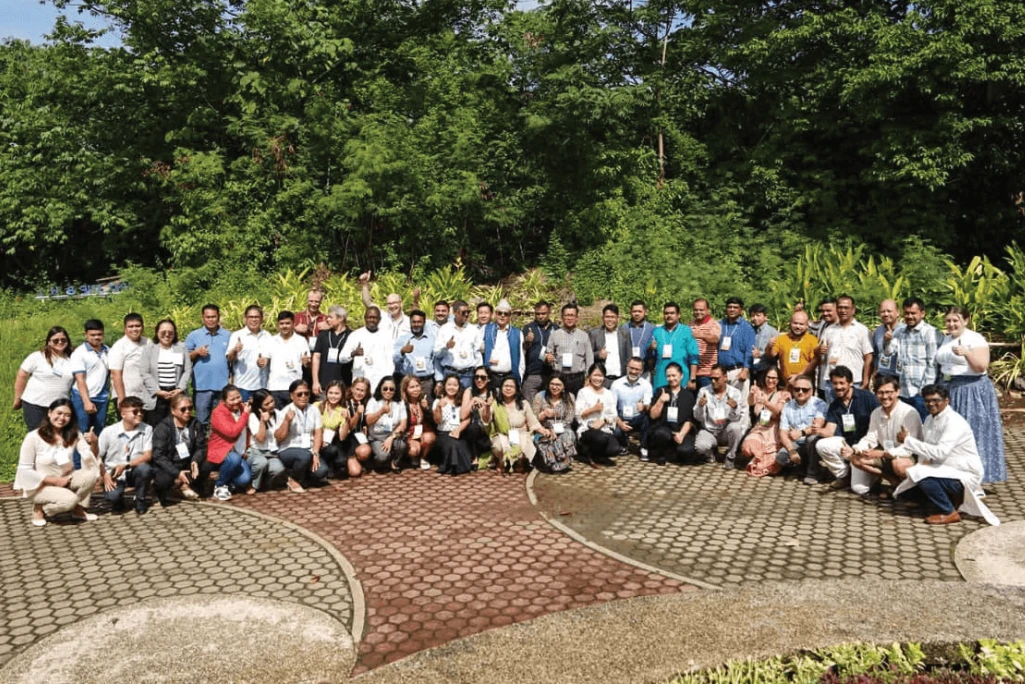
This reality is what brought Heifer International Asia and EcoAgriculture Partners together to deliver Integrated Landscape Management (ILM) training across Heifer’s four Asia country offices, combining online learning with an in-person workshop held in Bohol, Philippines, in January 2026.
The timing could not be more relevant. Across Asia, Heifer’s programs are already working at a large enough scale that landscape-level pressures can either amplify results or quietly undermine them. In Bangladesh, Heifer aims to support 120,000 smallholder women farmers to achieve sustainable living incomes by 2030 across climate-smart livestock and crop value chains. In Cambodia, Heifer is reforming vegetable production through sustainable practices and technologies, targeting over 10,000 households by 2027, while also rebuilding national poultry systems through a program reaching close to 90,000 households by 2026. These initiatives depend on functioning landscapes: reliable water, healthy soils, stable ecosystems, and coordination across the many actors who shape land use.
The same is true in India where Heifer’s work ranges from strengthening farmer-producer organizations and inclusive poultry and horticulture markets to targeted programs like Hatching Hope, which reaches 30,000 farmers, and goat value chain initiatives that support 30,000 women farmers toward living incomes. In Nepal, the Milky Way program is designed to improve livelihoods for 500,000+ smallholder dairy farmers and double domestic milk production by 2030, alongside livestock value chain programs scaling to 125,000 families directly and 200,000+ more families indirectly across 29 districts. In every country, the message is the same: markets and value chains may drive income, but landscapes determine whether those gains last.
In every country, the message is the same: markets and value chains may drive income, but landscapes determine whether those gains last. These programs are designed to raise incomes, strengthen enterprises, and expand market access, yet their long-term success , to a great extent, depends on environmental stability. Those results rest on work that often goes unseen: defining landscape boundaries, strengthening governance, aligning institutions, and coordinating the many stakeholders who depend on the same land and water resources.
That is where Integrated Landscape Management comes in. ILM is the behind-the scenes, common-sense approach that is often missing in development work. Instead of running disconnected projects, one for crops, one for livestock, one for water, one for forests, it treats the landscape as a single living system. ILM helps teams ask better questions: Where will this community’s water come from five years from now? Who actually makes decisions about land, and who gets left out? If production expands in one area, what breaks downstream? What does this mean for soils, rivers, grazing land, forests? Which local institutions are already holding the landscape together, and where are the gaps that keep people from working as one?
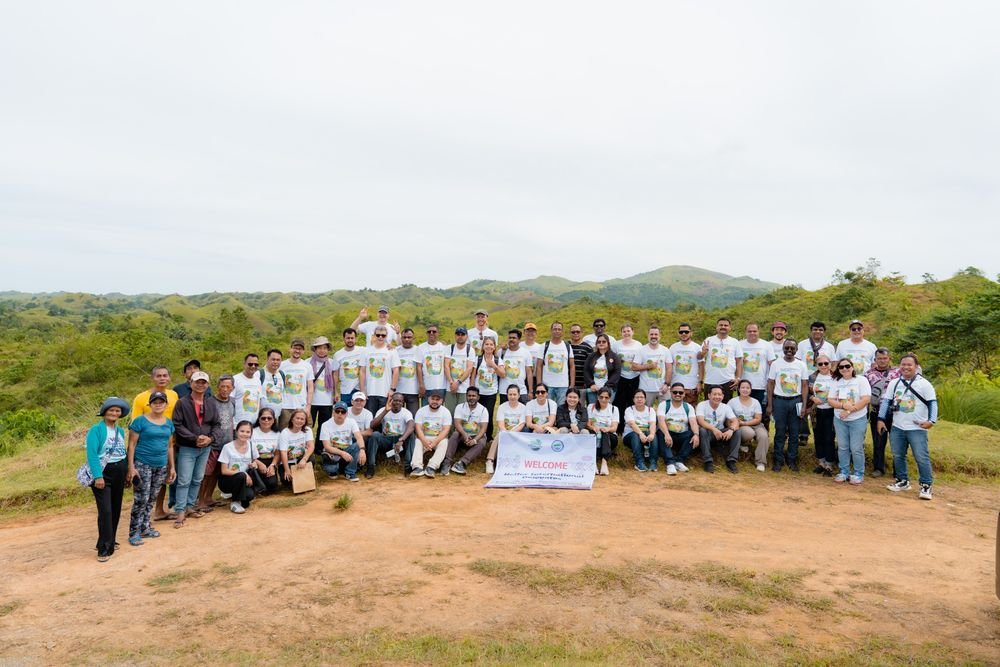
Through the seven-month program, Heifer teams have moved from ILM fundamentals to real-world application. They worked through practical steps such as defining landscape boundaries, prioritizing urgent challenges, mapping stakeholders, and identifying the governance structures and partnerships needed to coordinate action. With the in-person workshop now complete and the final online session still ahead, the program has already generated tangible outputs: each country team has identified at least one priority landscape, analyzed its context, mapped key actors and existing platforms, and developed a draft next-steps plan to embed a landscape approach into Heifer’s ongoing work.
The remaining online session is focused on consolidating learning, troubleshooting barriers, and supporting teams as they move from planning to implementation. Beyond the capacity building program, the Heifer teams will continue advancing their work using ILM by refining boundaries, strengthening partnerships, and developing governance and implementation plans that can be integrated into ongoing country programs.
The ripple effect of the Heifer-EcoAgriculture Asia partnership reveals something bigger. Integrated Landscape Management is gaining traction across regions as a practical approach to complex rural development. This Asia collaboration builds on an earlier successful ILM collaboration in Latin America, where Heifer and EcoAg explored how landscape-scale approaches can strengthen biodiversity, resilience, and local economies in the region, helping practitioners apply ILM principles in real-world contexts. That momentum is snowballing. Heifer staff from Africa who participated in the Bohol workshop are preparing to lead their own ILM training across their country offices in the coming months, showing how capacity built in one region can spark leadership and innovation in another.
Together, these cross-regional exchanges signal a broader movement: Integrated Landscape Management is becoming a shared practice carried forward through partnerships, strengthening landscapes from Latin America to Asia and now Africa. As more development organizations look beyond isolated projects toward systems-level solutions, EcoAgriculture continues to work alongside global partners to help integrate landscape approaches that sustain both livelihoods and ecosystems over time.