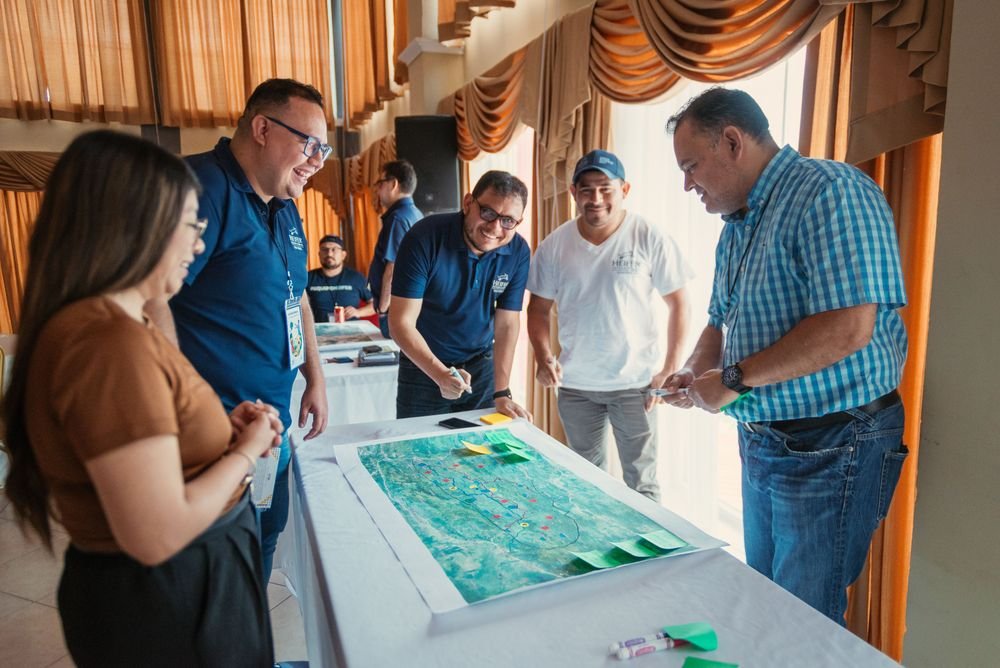
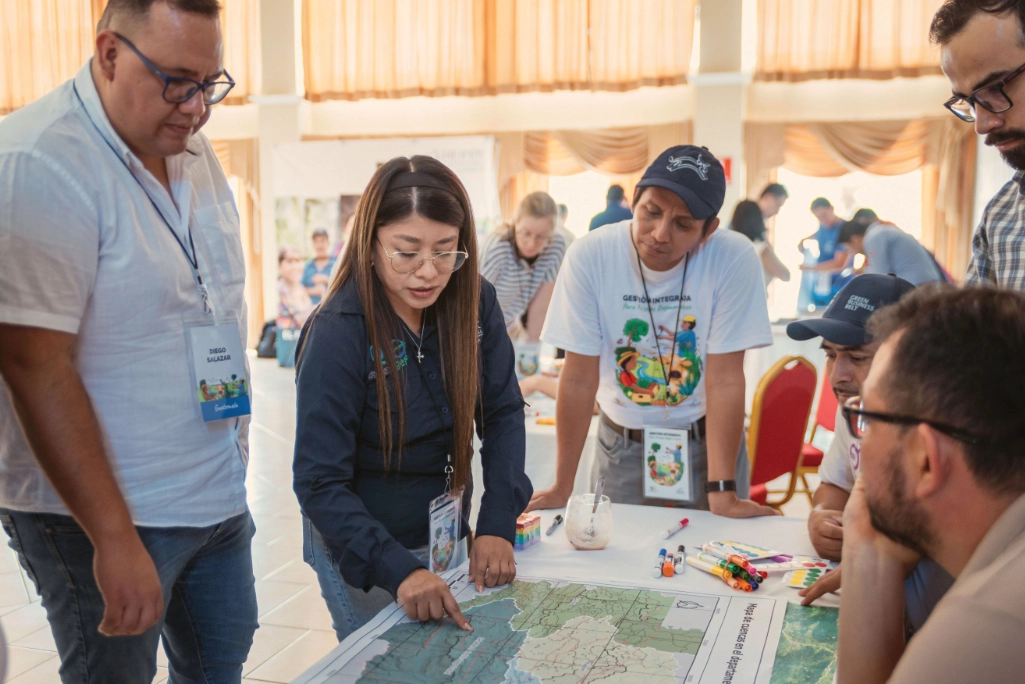
Over four days in May, nearly 50 sustainable development and agriculture experts from Heifer International gathered in Guatemala to learn how to employ a powerful concept called Integrated Landscape Management (ILM). The experts’ implementation of ILM could transform the organization’s existing approach to community economic development, nature regeneration, and livelihood improvement.
The workshop, held from April 28 to May 1 on the shores of Lake Petén Itzá, brought together Heifer staff members and EcoAgriculture Partners facilitators to lay the groundwork for incorporating landscape approaches into their existing project portfolio. The organization’s interest in ILM reflects its growing awareness and desire to improve the connection across the region’s environmental, social, and economic dimensions.
Heifer Explores ILM for a Better Sustainable Development Approach
For over 80 years, Heifer International has been a worldwide leader in sustainable global development, working alongside smallholder farmers to sustainably address hunger and poverty while caring for the Earth. Heifer is focused on integrating smallholder farmers, especially rural women, youth, and Indigenous populations, into food systems to enable them to earn sustainable living incomes while reaching benchmarks such as climate-friendly farming practices. To achieve this, they provide farmers with agricultural training, access to capital and markets, and other resources that improve their lives and communities.
Mark Chandler, Heifer’s Director of Environmental Initiatives/Caring for the Earth, first considered collaborating with EcoAg to bring ILM into his organization while attending a workshop last summer. He saw an opportunity to make Heifer’s field work more durable in the long term by embedding landscape approaches.
“It’s difficult to talk about resilience if we don’t include the landscape as part of program design,” Chandler said. He emphasized that ILM could help address common challenges to all members of the region, such as water scarcity, soil health, and access to inputs, with an approach accessible to farmers and connected to local conditions.
At its core, ILM is all about effective collaboration, bringing together seemingly disparate groups to manage land and resources in a way that balances competing needs and objectives within a defined geographical area. This approach emphasizes long-term partnerships, shared vision, and adaptive management to achieve outcomes that protect biodiversity, boost the local economy, and strengthen climate resilience.
Rabin Niraula of Heifer Asia said, “We already work with farmers in different landscapes, and this approach gives us a clearer foundation to do it better, with greater impact and a greater vision for the future.”
Patricia Bon, Senior Program Manager at EcoAgriculture Partners, emphasized the common thread between Heifer’s existing work and ILM principles. “What’s powerful about ILM is that it builds on what already makes Heifer’s work impactfuldeep relationships, local knowledge, and grassroots partnerships,” she said. “By looking beyond individual projects and engaging with the broader landscape, they can reach more people, forge stronger alliances, and drive more sustainable, systemic change. It’s about amplifying what they already do while creating space for new possibilities.”
Co-Creating in Real Time
Central to the success of this workshop was its unique approach to design and implementation. From the workshop’s inception, Heifer program staff co-designed, developed, and imagined what ILM could look like in their landscapes. The intentionally participatory format allowed for mutual learning, inter-team dialogue, and cross-country exchange, a hallmark of EcoAgriculture Partners’ approach to training and facilitation.
Heifer staff engaged with ILM’s core principles through sessions on defining a landscape, identifying stakeholders and boundaries, and exploring landscape finance mechanisms. EcoAg facilitators designed the workshop to be highly interactive, enabling participants to engage with peers, apply insights directly to their own landscapes, and build momentum for locally led action over time.
A highlight of the experience was an exercise that mirrored Shark Tank, where teams pitched real investment proposals for landscape initiatives. These mock pitches highlighted how integrated finance approaches like carbon credits, grant facilities, and public-private partnerships can support landscape regeneration and economic development.
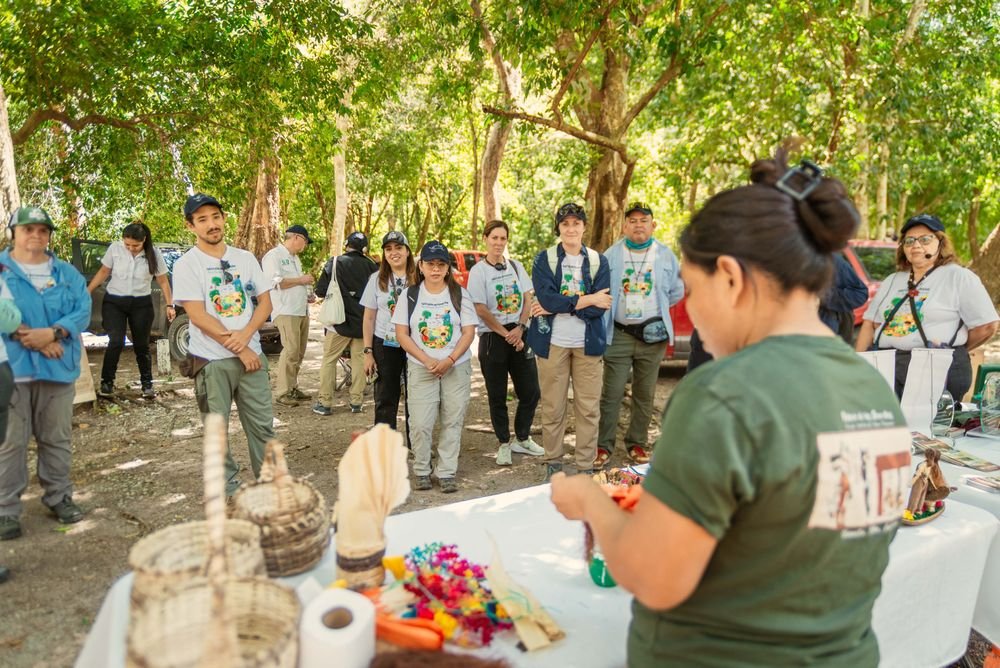
The workshop also included a field visit to Uaxactún, a community in the Maya Biosphere Reserve. Participants learned about sustainable harvesting practices for timber and non-timber products such as chicle, xate, pepper, and ramon seed. They also visited community spaces dedicated to rural tourism, environmental education, and artisanal production, highlighting the participation of women and youth.
Beyond the Workshop: Toward a Regenerative Future
Over the next four months, participants will continue to stay connected through a series of online trainings supporting their ILM journey. Each national team will develop next steps for implementing ILM in priority landscapes, ensuring plans remain flexible, realistic, and community-centered.
For Edwin Rocha, Heifer’s Regional Director of the Americas, this marks the start of a longer journey. “This is the beginning of a cycle that will keep us busy for the coming months,” he said. “Heifer is redefining its program model toward sustainable food systems and systemic change. ILM allows us to engage holistically, build alliances, and elevate local leadership.”
“Ultimately,” Chandler said, “the workshop was a turning point for Heifer. It’s an opportunity to rethink our programmatic approach, strengthen our strategies, and assume leadership in landscape regeneration from a more connected and sustainable perspective.”