
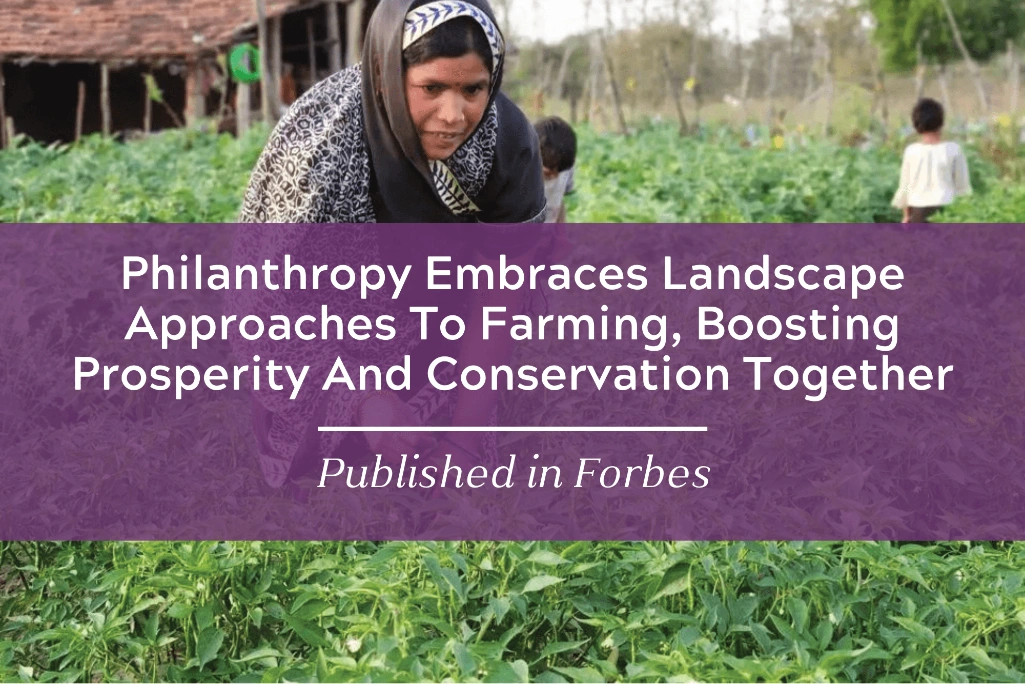
Philanthropic funds that take a broader view are helping cotton growers produce more sustainably and profitably for themselves and supply chains. Will industry and government commit, too?
As a young girl, Savita Ahake learned cotton farming’s rhythms: long hours spent in the fields, the anxious anticipation of harvest, the hopes of an abundant yield.This was life in Salaidana, a village of 500 people in the rolling hills of Pandhurna in India’s central state of Madhya Pradesh. Residents here rely on cotton for their livelihoods. Ahake grew up and farmed her modest four-acre plot with her husband and two daughters.Then, life’s rhythms changed. Droughts shrank yields. An influx of pests ballooned costs. Water supplies dried up. Volatile market prices slashed profitability.
“All of us in our village grow cotton,” says Ahake. “It’s a crop vulnerable to problems beyond our control, like climate and pests. When we experience these issues, the costs of running our farms increase. We try to manage these with bio-inputs, but these increase our running costs even more.”
For many villages like Salaidana, this confluence of factors had a profound impact. Many families fell into financial hardship and could not meet basic needs. A different approach was needed.
Continue reading the story at Forbes.com.
This story was written by EcoAg’s Director of Communications, Outreach, and Advocacy, Mike Keller. The full story was originally posted on Forbes EQ Brand Voice on May 13th, 2024.