
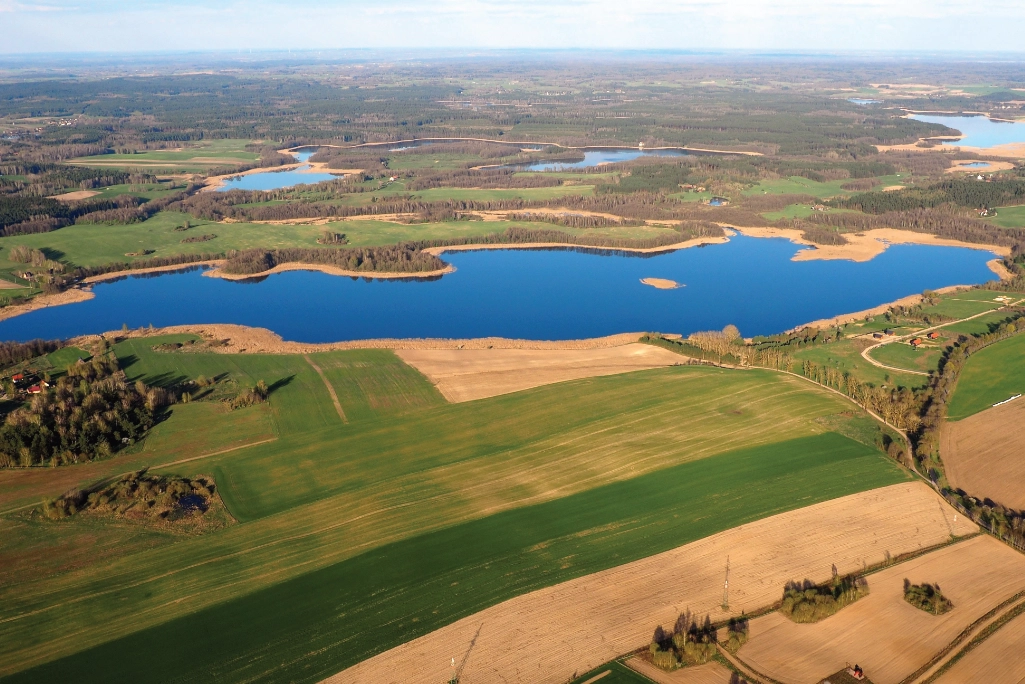
A new report highlights how governments should pursue territorial approaches to help their countries achieve the United Nations Sustainable Development Goals (SDGs). The paper, Territorial Approaches for Sustainable Development: A White Paper for Policy Formulation and Project Implementation, is critical to achieving the 17 SDGs and 169 targets to combat climate change and propel the world toward a more sustainable future. Progress has been slow in the decade since the UN defined the SDGs through its Agenda 2030, with only a few goals achieved as the world approaches the 10-year deadline. The new paper outlines nine ways governments can successfully implement territorial approaches to help them achieve their SDGs.
“At a time when integration and localization of SDGs are seen as essential to accelerating Agenda 2030,” said Florence Egal, an expert on urban-rural linkages and food systems, “territorial approaches provide a pragmatic means to bring together social, economic, and environmental issues; develop and implement concrete multi-actor local-specific strategies; and build on existing resources and experience for rights-based and resilient development.”
This report was authored by TP4D (Territorial Perspectives for Development), a group of organizations bringing together multilateral, donor, and civil society organizations that implement and support territorial and landscape approaches. The paper highlights the urgent need for improved policies to achieve the Agenda 2030 goals. It emphasizes the effectiveness of territorial approaches in addressing local challenges and fostering global sustainability. With institutional support and cross-sectoral collaboration, prioritizing these approaches can help people accelerate progress toward SDGs for a more equitable future for all.
Territorial approaches are ideas, mechanisms, and strategies that allow for place-based and contextualized sustainability efforts that can lead to integrated implementation of SDGs. Examples include joint agriculture and environment planning to ensure productivity and conservation objectives align with broader economic development. Using territorial approaches is critical to addressing power asymmetries across different communities and priorities, reducing inequalities, linking urban and rural areas, promoting sustainable food systems, protecting ecosystems and biodiversity, adapting to climate change, and promoting sustainable natural resources management and livelihoods. Implementing this inclusive governance model with a territorial and landscape approach can bring voices into decision-making that are often excluded, especially women, youth, Indigenous peoples, and small- and medium-sized enterprises.
Leaders and policymakers must adopt and promote territorial approaches to help communities and nations achieve the SDGs they set for themselves. In most cases, national governments must provide mechanisms and leadership to create or sustain the needed structure for territorial approaches.
“Leaders can realize multiple benefits when they apply territorial approaches,” said Louise Buck, senior advisor for EcoAgriculture Partners. “In western Kenya, the Ministry of Agriculture successfully led a multisector initiative to promote sustainable agriculture for food and water security and forest protection. Engaging farmers and civil society helped ensure the relevance to local communities and the program’s impact.”
Study authors elaborate on this example in Territorial Approaches to Sustainable Development, which examined 14 cases across nine countries to generate lessons from varying contexts in which territorial approaches have positively impacted multisector planning and policy.
The new white paper, which updates a 2018 report, highlights pathways to implement territorial approaches based on the endorsing organizations’ experiences and learnings over the past few years. It outlines four ways territorial approaches can overcome challenges to their successful implementation and their positive impact on SDG goals.
- Decentralized policies can enhance territorial development.
- National policy frameworks can strengthen rights to land, land use, natural resources, and access to adequate food for vulnerable groups.
- National support for territorial and landscape development initiatives and partnerships is needed to underpin capacity building for territorial development accessible to stakeholders at different levels.
- Mandated incentives for territorial approaches are needed nationally to broaden the focus from single-sectoral interests, such as focusing solely on agriculture or the environment, towards holistic approaches.
The challenges encountered at the territorial and landscape scales vary according to geography, demographics, and social, political, financial, and economic conditions. To overcome obstacles, territories must implement the following approaches successfully:
- Institutionalize studying and understanding territorial and landscape-scale needs, challenges, and benefits.
- Invest in empowering stakeholders.
- Design inclusive institutional frameworks.
- Address social dynamics and power imbalances.
- Go beyond administrative boundaries.
- Ensure adequate financing and unlock territorial opportunities.
- Incentivize cross-sectoral investments on the ground, such as merging infrastructure, environment, and agriculture investments into one unified program due to interdependencies.
- Evaluate impact and intensify research.
- Nurture evidence-based policy platforms.
The TP4D working group includes EcoAgriculture Partners, European Commission, Organisation for Economic Co-operation and Development (OECD), Food and Agriculture Organization (FAO), Local Governments for Sustainability (ICLEI), United Nations Capital Development Fund (UNCDF), Federal Ministry of Economic Cooperation and Development (BMZ-Germany), German Development Agency (GIZ), French Development Agency (AFD), United Nations Human Settlements Programme (UN Habitat), French Agricultural Research Centre for International Development (CIRAD) and United Nations Educational, Scientific and Cultural Organization (UNESCO).