
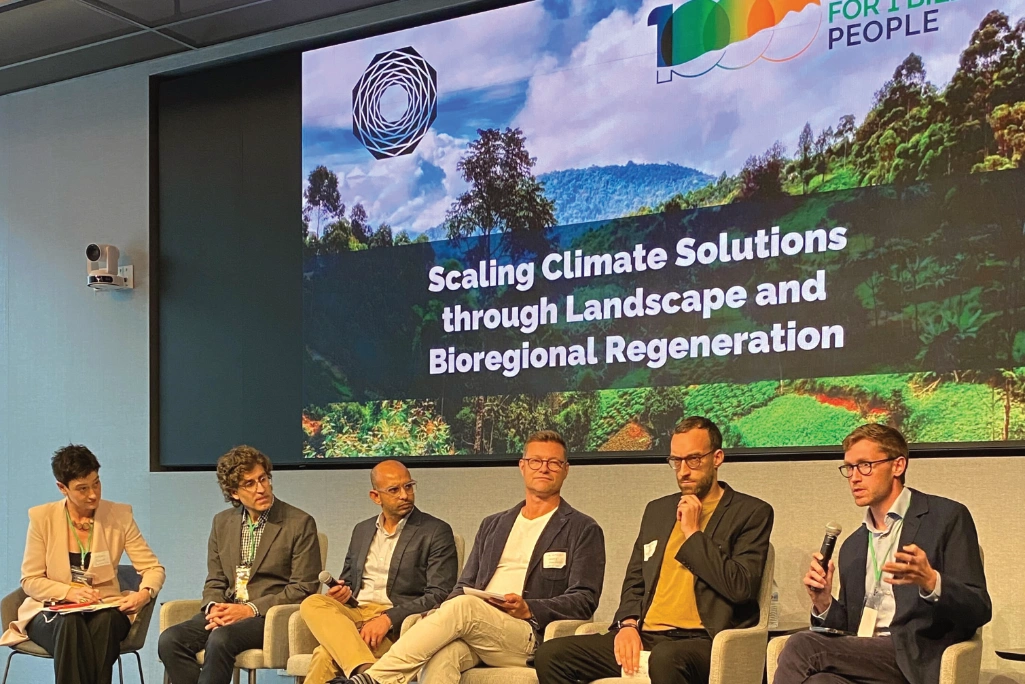
In New York City's bustling streets, a different type of finance conversation has been happening since late September. These are not the typical exchanges one might imagine–not asset managers talking about market changes or traders gossiping about an upcoming IPO. No, the conversations are about landscape finance, a new way of funding long-term holistic landscape restoration to benefit not just shareholders but communities and nature, too.
As finance is a significant obstacle to tackling climate challenges, landscape finance conversations took over Climate Week NYC 2024, one of the premier annual global climate events. Among the flurry of events taking the stage, one called "Scaling Climate Solutions Through Landscape and Bioregional Regeneration" brought together investors, landscape leaders, research experts, and scholars to explore how investment could relieve the climate crisis instead of making it worse.
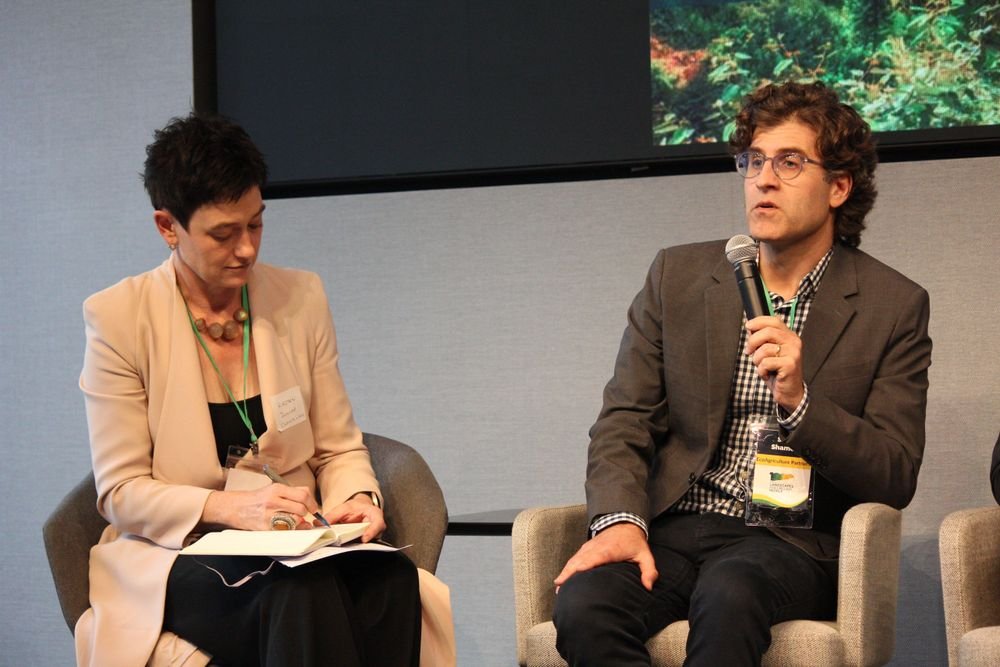
Kirsten Dunlop, CEO of EIT Climate-KIC, and Seth Shames, Managing Director of EcoAgriculture Partners, speaking on a panel at the Climate Week NYC 2024 event "Scaling Climate Solutions Through Landscape and Bioregional Regeneration."
This session provided a unique platform for funders and implementers to explore financial innovations to maximize funding for large-scale transformation of global food and other systems that are significant sources of greenhouse gas emissions. "The key to making this shift a reality lies in collaborating with various stakeholders, politicians, business leaders, and investors. By working together, they can create solutions that benefit everyone," said Seth Shames, panelist and EcoAg's managing director. "These partnerships must be more than transactional; they must also include trust, reciprocity, and a shared vision."
During the event, the Oak Foundation's Mariam Kenza-Ali and the Rockefeller Foundation's Betty Kibaara discussed how philanthropies must rethink and reimagine their funding models and be willing to invest directly in local leaders, understand their resource needs, and trust them to design and implement programs that generate impact. Shannon Sutherland, an attendee at the event and EcoAg's communications project manager, said, "It was inspiring to hear philanthropic leaders talking about a new funding model that takes risks on bold initiatives, giving agency to local and Indigenous communities and allowing them space to falter, learn, and grow to achieve their full potential."
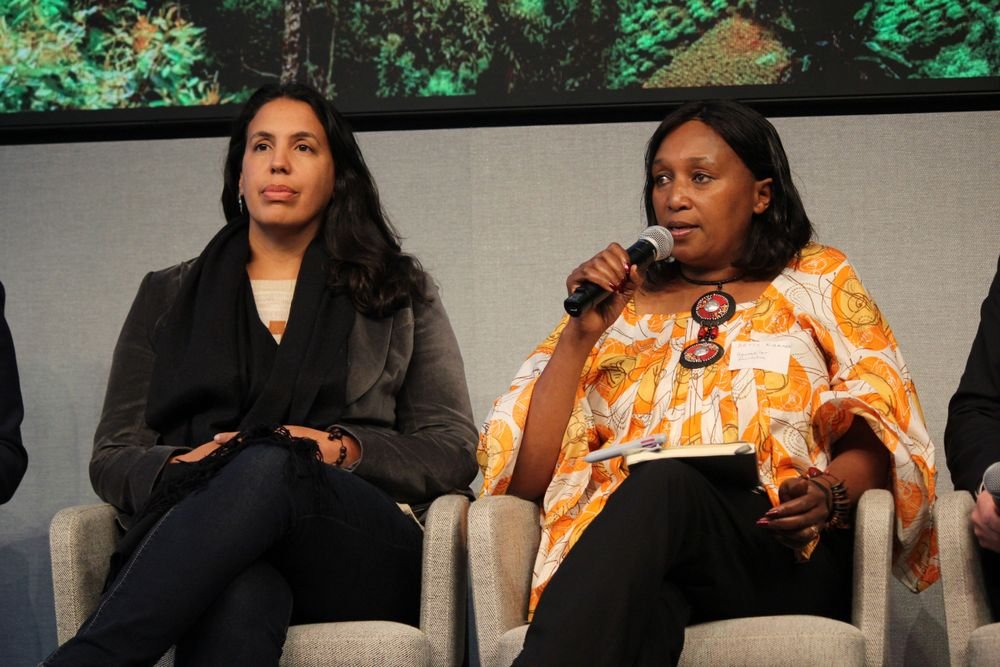
Mariam Kenza-Ali from the Oak Foundation and Betty Kibaara from the Rockefeller Foundation, speaking at the Climate Week NYC 2024 event "Scaling Climate Solutions Through Landscape and Bioregional Regeneration."
The all-day event attracted over 200 attendees and featured speakers from EIT Climate-KIC, the Oak and Rockefeller foundations, EcoAgriculture Partners, Dark Matter Labs, the International Institute for Environment and Development, and more. Panelists shared a common theme: Financiers must invest in locally led partnerships and local leadership to achieve climate goals. How they invest in them can take many forms, from capacity building and shifting financing that supports local initiatives to strengthening governance structures to include diverse and equitable representation in policy. "The vision and motivation were there. It seems it is just a matter of uniting efforts across sectors and systems to achieve common goals," said Sutherland.
Other events at Climate Week NYC 2024 shared similar ideas. There was a strong push concerning the urgent need to transition to more sustainable food-production practices to mitigate the climate crisis - such as agroecology and climate-smart or regenerative agriculture. Diving deeply into this idea, EcoAg Senior Project Manager Patricia Bon attended the "Scaling Regenerative Agriculture" event hosted by Regen House. This event focused on how the costs of transitioning to regenerative practices on a large scale will be managed. The panel emphasized that while there are upfront costs, long-term benefits make sustainability a smart investment. Juan Aguiriano, chief sustainability officer at food company Kerry, suggested that organizations and companies will follow once a few major corporations begin making these investments.
Beyond paying farmers well for their products, Aguiriano said, Kerry also provides additional stipends to help them adopt better practices and transition to more sustainable agriculture. "This direct investment in local farming communities, while ensuring financial support for their efforts, is an inspiring model for fostering sustainable practices at the grassroots level," said Bon. "It's not just about meeting corporate sustainability goals–it's about genuinely empowering the farmers to lead the transition."
Climate Week's events offered views into how humanity can tackle the challenges of transitioning to more sustainable and holistic agricultural practices, providing models for companies and philanthropies to follow. "As corporations like Kerry lead the way, they set a powerful precedent for others to get involved," said Bon. "Real investments are being made to support farmers in the transition to regenerative practices, which is essential for the future of food production and climate resilience."