
Representatives from 196 countries will gather at the UN’s biodiversity conference (COP16) in Colombia in late October to address the urgent issues of deforestation, land degradation, and biodiversity loss. EcoAgriculture Partners will be in the middle of the action, leading discussions and calls for countries to adopt innovative, nature-based solutions like landscape restoration, agroforestry, and regenerative agriculture.
Check out all of our events below:
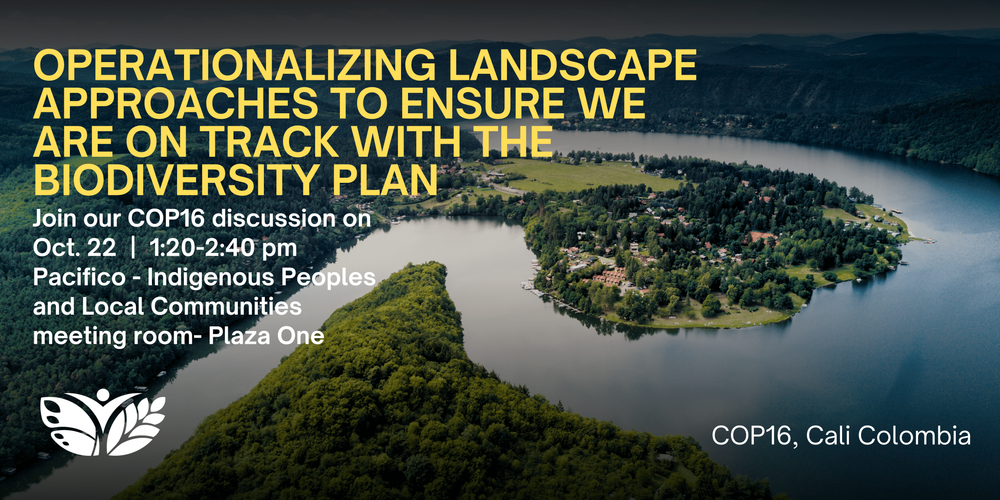
Operationalizing landscape approaches to Ensure We Are on Track with the Biodiversity Plan
Date: Oct. 22
Time: 1:20-2:40 pm
Location: Pacifico – Indigenous Peoples and Local Communities meeting room – Plaza One
Landscape approaches refer to strategies that consider the diverse ways people use and interact with a given landscape or seascape. These approaches recognize the connections between various management styles, from instituting preserves to sustainable agricultural, commercial, and residential land use. In the context of the Kunming-Montreal Global Biodiversity Framework, agreed to at the last UN biodiversity conference, they help to integrate key biodiversity targets.
This approach encourages a broad understanding of stakeholders’ priorities, including policymakers, indigenous peoples, and local communities. It also addresses power imbalance issues, identifies collaboration and conflict areas, and supports ecological and social resilience. In doing so, landscape approaches align with the principles of “whole-of-government and whole-of-society efforts,” which focus on inclusive and collaborative planning and implementation across different levels. This collaborative nature fosters a sense of connection and belonging, making everyone feel part of a larger effort and reinforcing the inclusivity of the approach.
Implementing these approaches is not a rigid process. It requires precise spatial planning, well-defined roles for stakeholders, and flexible implementation and monitoring plans. This adaptability ensures that the approach can be tailored to the unique needs of each project, providing reassurance and confidence in its effectiveness. The appropriate funding mechanisms, tailored to the specific scale of the project, whether local or global, further enhance this confidence.
This event will explore how landscape approaches can be incorporated into national biodiversity planning, showcasing initiatives that support integrated, whole-of-society solutions. Speakers and panelists with diverse perspectives on landscape and seascape management will share best practices, opportunities, and challenges while engaging with the audience to discuss how to make these approaches more effective.
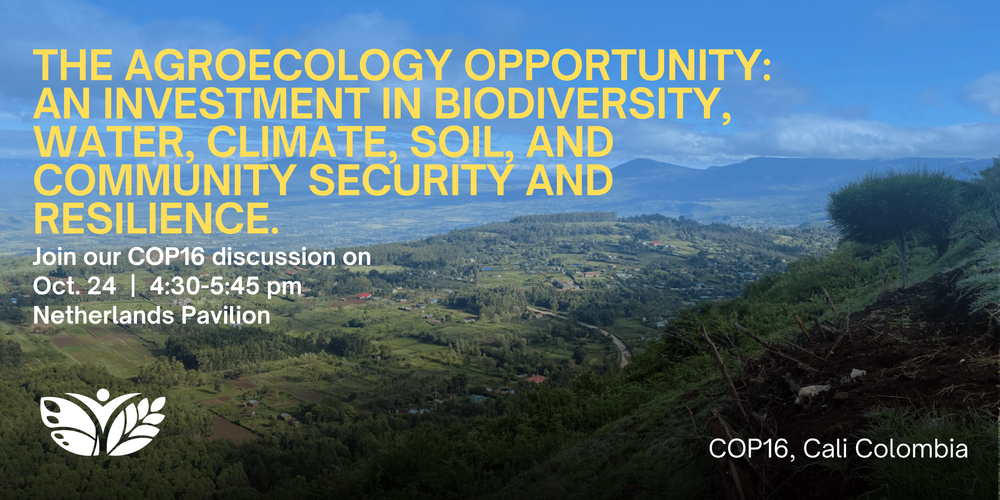
The Agroecology Opportunity: An Investment in Biodiversity, Water, Climate, Soil, Community Security and Resilience
Date: Oct. 24
Time: 4:30-5:45 pm
Location: Netherlands Pavilion
Agroecology offers a valuable opportunity that we must embrace now. This session will highlight the wide-ranging benefits of agroecological farming systems, including conserving water, soil, and biodiversity, mitigating and adapting to climate change, and boosting socioeconomic resilience.
Expert panelists from various global initiatives and organizations promoting agroecology will:
- Explain the numerous benefits of agroecological practices, such as improving water systems, preserving biodiversity, regenerating landscapes, supporting farmer resilience, and creating sustainable food production systems.
- Share real-world examples of how agroecology is being implemented in agriculture, from farms to larger landscapes across regions like Africa, Latin America, and Europe.
- Discuss the importance of cross-sector collaboration and multi-stakeholder dialogues, with lessons learned from groups such as the French Water, Soils, Agroecology, and Food Security working group.
- Highlight the strategic role of agroecology in multiple UN frameworks, including the Convention on Biological Diversity (CBD), the UN Framework Convention on Climate Change (UNFCCC), the Sustainable Development Goals (SDGs), and UN human rights commitments.
- Explore how countries can integrate agroecology and reduce the use of toxic pesticides in national plans, particularly through National Biodiversity Strategies and Action Plans (NBSAPs) to meet the goals of the Global Biodiversity Framework (GBF).
Policymakers are encouraged to incorporate agroecology into their NBSAPs, as global reports from the IPCC, IPBES, and others stress the need to reduce synthetic inputs to address climate, biodiversity, human health, and social crises. Adopting these methods is key to fulfilling the Paris Climate Agreement, the UN SDGs, and the post-2020 Global Biodiversity Framework.
Additionally, this session will raise awareness of how agroecological practices – such as soil and water conservation, intercropping, crop rotation, and diversification – reduce reliance on pesticides while maintaining crop yields, ensuring farm productivity, and preserving profitability.
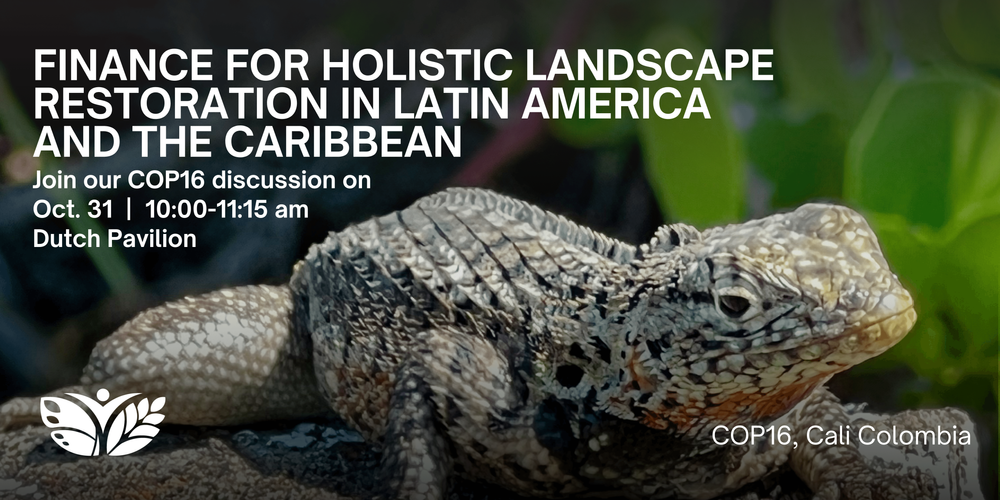
Date: Oct. 31
Time: 10:00-11:15 am
Location: Dutch Pavilion
Join this event and leading experts from EcoAg, Commonland, 1000 Landscapes for 1 Billion People, the 20×20 Initiative, Rainforest Alliance, World Wildlife Fund Colombia, and SNV. Together, we will showcase how landscape finance effectively supports national biodiversity strategies and action plans (NBSAPs) in Latin America and the Caribbean, particularly those related to water management and conservation. NBSAPs are a country’s plan for the sustainable use and conservation of biological diversity.
Two years ago, at COP15 in Montreal, Canada, delegates created the Global Biodiversity Framework (GBF), which has 23 targets to address various aspects of biodiversity conservation, sustainable land use, and equitable sharing of natural resources. These targets are part of the Post-2020 GBF, adopted during COP15 to urgently reverse biodiversity loss and ensure ecosystem resilience in a global crisis.
Since then, many of the 196 countries that are parties to the convention have not been doing well in achieving these targets, and even fewer have created financing plans for achieving these targets. This event aims to highlight the importance of landscape finance in NBSAPs and in developing biodiversity finance plans to meet GBF’s target 2, which is focused on restoring degraded ecosystems. Specifically, it aims to ensure that by 2030, at least 30% of degraded terrestrial, inland water, and marine ecosystems are under effective restoration.
At the event, we will launch a new publication, Towards Financing Large-scale Restoration in Latin America and the Caribbean (available in English and Spanish). This practical publication offers policy recommendations for scaling holistic restoration efforts through integrated landscape and water management approaches. It will equip countries with the necessary tools as they develop financing plans for the NBSAPs.
Closing Reflections
As we look ahead to COP16, the urgency of addressing biodiversity loss, climate change, and land degradation has never been clearer. EcoAgriculture Partners’ events will provide valuable insights into practical, scalable solutions prioritizing ecological health and community resilience. From operationalizing landscape approaches to exploring the transformative potential of agroecology, these discussions are crucial to advancing the goals set out in the Global Biodiversity Framework.
Through collaborative efforts, innovative financing strategies, and inclusive planning, COP16 presents an opportunity to create real, meaningful change. By fostering cross-sector partnerships and scaling up nature-based solutions, we can nurture landscapes that thrive – benefiting ecosystems, economies, and communities. Join us in Cali to be part of the solution.