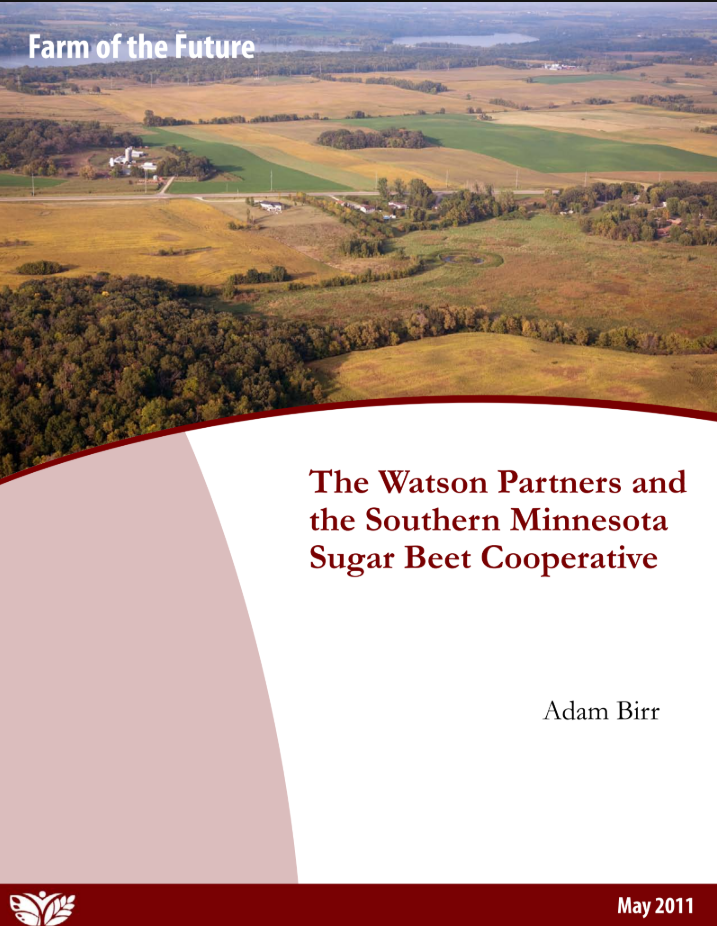
The Watson Partners and the Southern Minnesota Sugar Beet Cooperative
Region of Focus
Topics
Overview
The Watson Partners Farm is part of a cooperative of sugar beet growers that established an internal point to non-point phosphorus trading program to offset phosphorus discharge from its processing facility. The sugar beet growers receive payments for planting cover crops that reduce phosphorous loads by more than twice the amount required by the state.
Minnesota River Basin contributes to Dead Zone
Phosphorous runoff from agricultural and non-agricultural lands in the basin promotes algal blooms in local rivers and lakes that contribute to a dead zone (an area of depleted oxygen) in the Gulf of Mexico, which harms aquatic biodiversity and the seafood industry. Farming makes up 82% of the land use in the Minnesota River Basin. Cover cropping is a farming practice that reduces phosphorus inputs to waterways, helping to improve water quality downstream.
Responding to regulation
The cooperative runs its own sugar beet processing plant. In 1998 it sought to expand its wastewater facility and worked with the state agency and local partners to design an internal phosphorus trading program that would allow it to meet pollution regulations within the Minnesota River Basin.
Cover cropping reduces runoff and increases yields
Watson Partners is a fifth generation family farm with 7,500 acres of corn, soybeans, and sugar beets. In 2009, father and son planted an oat cover crop over all 2,179 acres of sugar beets as part of their cooperative’s phosphorus trading program. Watson Partners and other sugar beet growers participating in the program receive a direct payment of $4 per acre from the cooperative for planting cover crops. While the payments themselves do not significantly bolster farm revenue, cover cropping reduces soil erosion and protects young sugar beets from strong spring winds, improving sugar beet yield and associated income. Over several years, cover cropping resulted in an average annual increase of sugar beet yield worth $55 per acre.
Media Type
Language
Published
16 May 2011
Authored by
Birr Adam
License
Creative Commons - BY - NC - ND
License
License
Related Resources
Forest of the Future
Buck Island Ranch and the Florida Ranchlands Environmental Services Project
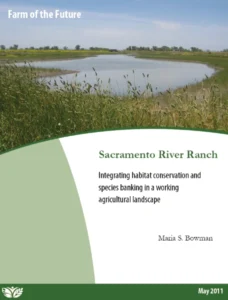
Sacramento River Ranch