
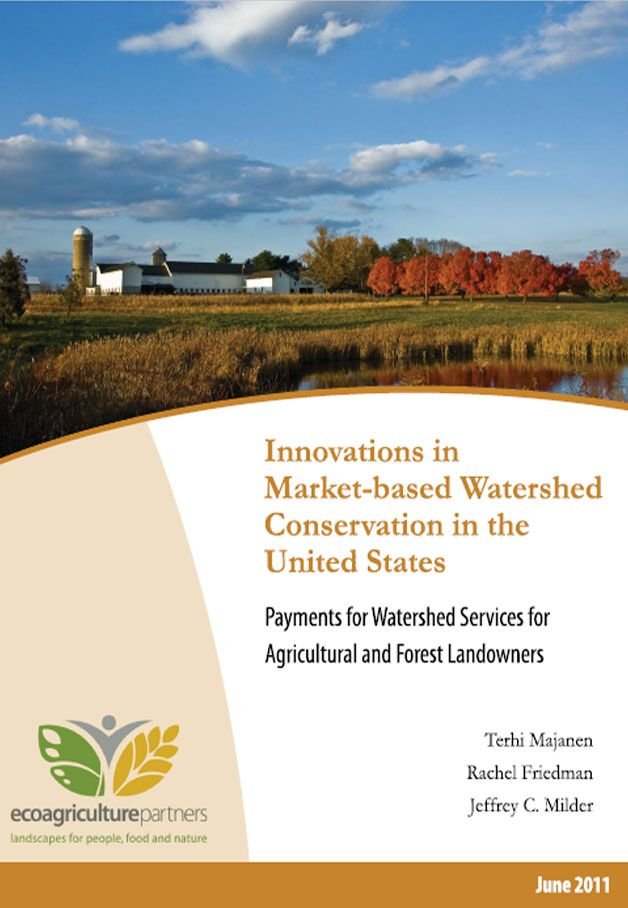
Innovations in Market-Based Watershed Conservation in the United States
Region of Focus
Overview
Water is crucial for many human needs, yet water resources in the United States face unprecedented threats from pollution, urbanization, aquifer depletion, and many other challenges.
Managing water quantity and quality
A variety of programs and incentives has been developed to foster watershed stewardship on private agricultural and forest lands. One such approach is payments for watershed services (PWS). This voluntary, market-based mechanism offers cash payments or other benefits to landowners in exchange for providing “watershed services” through the adoption of specific agricultural, forestry, or land management practices. For instance, landowners may manage water quantity through practices that recharge aquifers, store flood waters, or control the timing and amount of water withdrawals, or they may manage water quality through erosion control or pollution attenuation measures.
This study surveyed new or emerging PWS project models in order to understand their scale, characteristics, and future potential. Findings from the survey are examined in the report. Further details on each of the PWS projects identified are available at the Conservation Registry, an online repository of conservation projects in the United States.
Media Type
Language
Published
15 June 2011
Authored by
Friedman Rachel, Majanen Terhi, Milder C. Jeffrey
License
Creative Commons - BY - NC - ND
License
License