
Financing Strategies for Integrated Landscape Investment: Case Study of Lake Naivasha, Kenya
Region of Focus
Topics
Overview
Biodiversity and agribusiness side by side
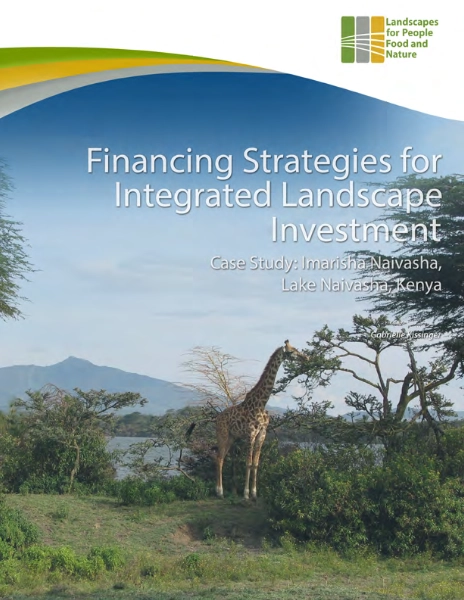
Over the last fifty years, the Lake Naivasha catchment has seen a seventeen-fold population increase and explosion of aquaculture and the cut flower industry. The lake is an area of significant biodiversity: it is a designated RAMSAR site along the African flyway, a crucial stopover point for migratory waterfowl. Growing concerns about environmental degradation and a 2008-2009 drought spurred the government to create Imarisha Naivasha, an entity that convenes a variety of stakeholders in the name of integrated landscape management.
Improving through targeted investment
Imarisha means “improve” in Swahili. The organization’s work is to conserve forests, biodiversity, and key environmental services by helping local industries improve their environmental impacts and by channeling financing to key ecosystem services stewards like up-catchment smallholders to reward good practices. A unique governance structure ensures equal representation for small fishers, vegetable farmers and herders along with the major industrial players.
Media Type
Language
Published
1 April 2014
Authored by
Gabrielle Kissinger
License
Creative Commons - BY - NC - ND
License
License
Related Resources

Financing Strategies for Integrated Landscape Investment: Case Study of Atlantic Forest, Brazil
Financing Strategies for Integrated Landscape Investment – Synthesis Report
Financing Strategies for Integrated Landscape Investment: Integrated Landscape Initiative Analysis

Financing Strategies for Integrated Landscape Investment: Financial Institution Case Studies