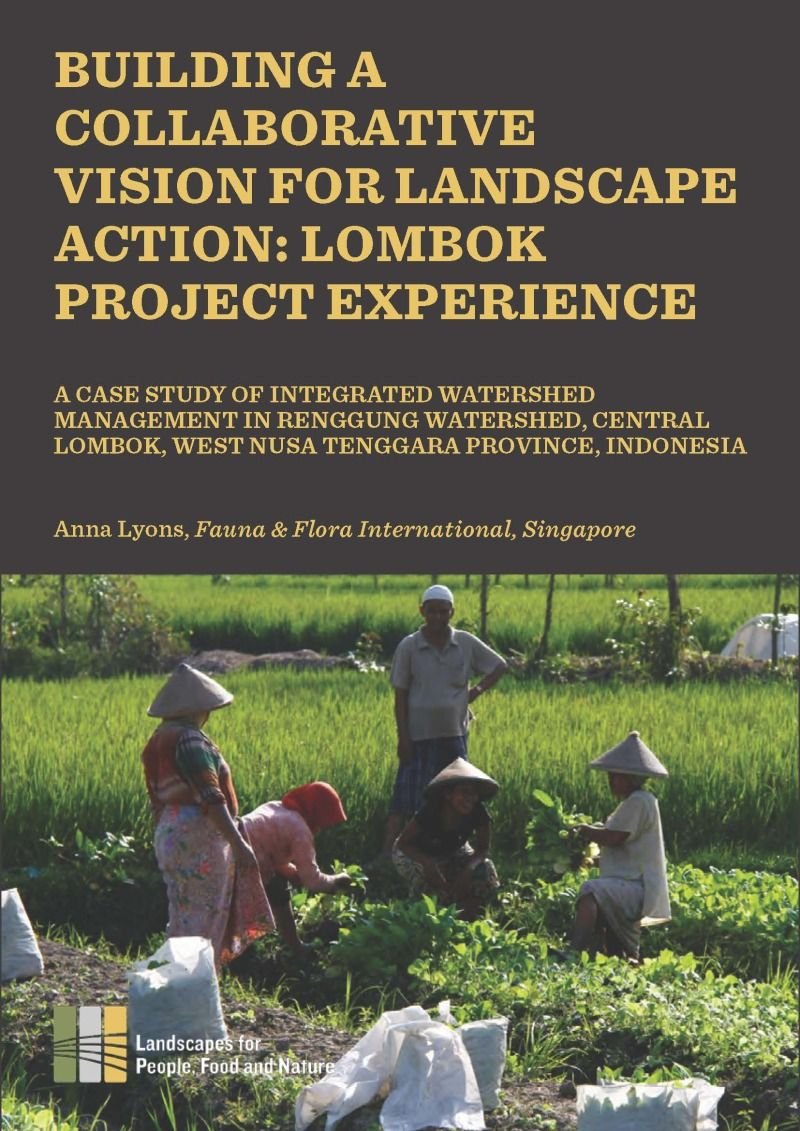
Building a Collaborative Vision for Landscape Action: Lombok project experience
Region of Focus
Overview
Multi-stakeholder and Multi-sector Action
This case study shares how different actors in a landscape can move towards collaborative multi-stakeholder and multi-sector action for managing landscapes sustainably, drawing on lessons from Lombok. It shows how PT Export Leaf Indonesia (PT ELI), one operating company in the British American Tobacco (BAT) group, and Lombok stakeholders transitioned from a single sector focus to a multi-stakeholder integrated approach to watershed management.
Beginning with a Biodiversity Assessment
This journey began with a Biodiversity Risk and Opportunity Assessment (BROA), a landscape tool to assess and address corporate impacts and dependencies on biodiversity and ecosystem services (BES), developed by the British American Tobacco Biodiversity Partnership (BATBP).
What Challenges Remain
This case study enables other landscape leaders in the Landscapes for People Food and Nature (LPFN) Initiative to learn from the Lombok landscape approach, including what works and what challenges remain. The case study is based on the experience and observations of Fauna & Flora International (FFI).
Media Type
Language
Published
27 November 2014
Authored by
Anna Lyons
License
Creative Commons - BY - NC - ND
License
License
Related Resources
Bridging the Gap from Local to Landscape in Northern Honduras
Advancing and Balancing Ecological Conservation, Agricultural Production and Local Livelihood Goals in Kenya’s Kikuyu Escarpment Landscape