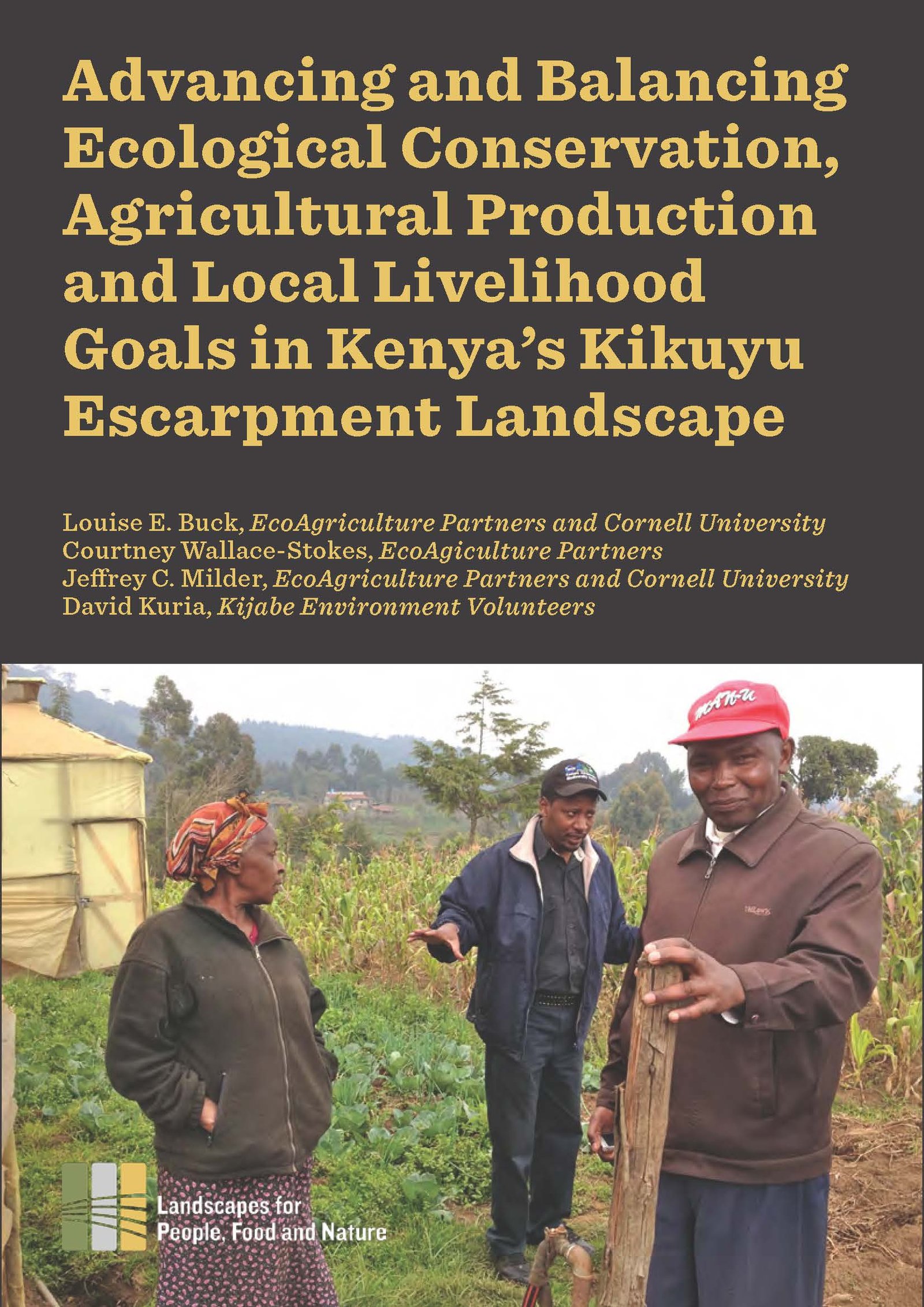
Advancing and Balancing Ecological Conservation, Agricultural Production and Local Livelihood Goals in Kenya’s Kikuyu Escarpment Landscape
Region of Focus
Overview
Critical Habitat and Water Source
Central Kenya’s Kikuyu Escarpment is host to rich wild biodiversity and a strong cultural heritage. It is also an important agricultural production area and the catchment for much of Nairobi’s water supply. Increasing human population has put pressure on the natural resource base that most of the region’s residents rely upon.
Local Organization Leads the Way
The local organization, Kijabe Environment Volunteers (KENVO), has mobilized communities and adopted a landscape perspective to sustainably manage natural resources and balance the multiple functions of the landscape. This case study characterizes the Kikuyu Escarpment landscape and describes the ways in which an integrated landscape management approach has enabled local communities to define and pursue their goals related to agricultural development and profitability while conserving the area’s critical natural capital.
New Economic Opportunities that Preserve the Forest
KENVO has helped diversify the local economy, helping increase economic opportunities for smallholders through projects like beekeeping and egg and poultry production, that reduce pressure on forest land. They have also begun to develop the area’s rich tourism potential.
Media Type
Language
Published
1 December 2014
Authored by
Louise Buck, David Kuria, Jeffrey C. Milder, Courtney Wallace-Stokes
License
Creative Commons - BY - NC - ND
License
License
Related Resources
Bridging the Gap from Local to Landscape in Northern Honduras
Building a Collaborative Vision for Landscape Action: Lombok project experience