
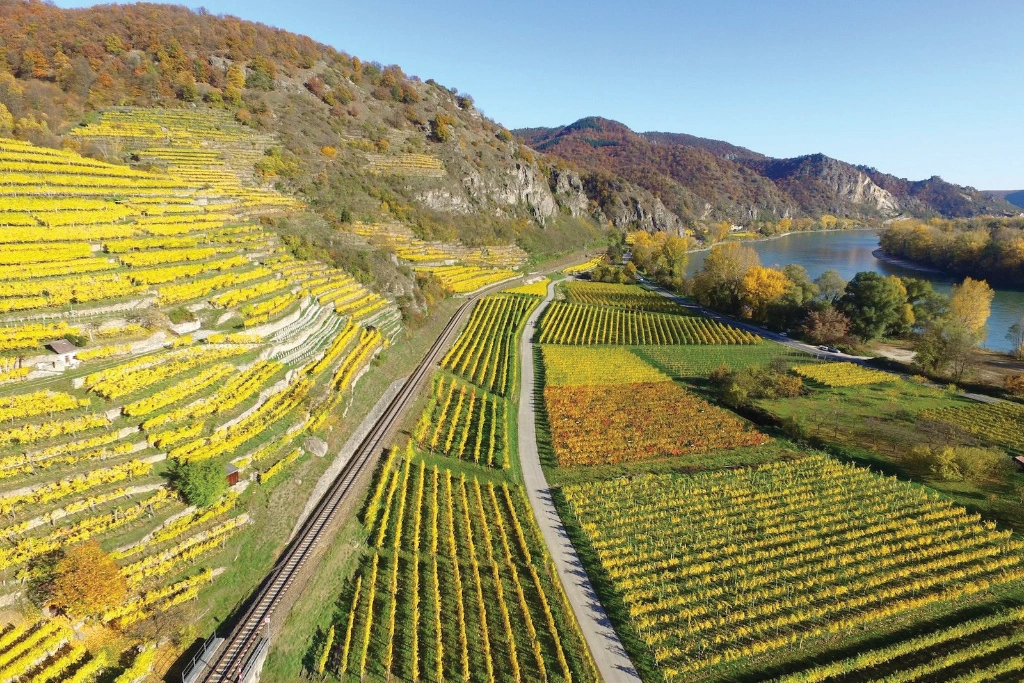
Landscape approaches are not a fad. Industrial agriculture dependent on toxic chemicals, protected areas that exclude the very communities whose long-term stewardship maintained them, and the hyper-specialization of the sciences are fads. Landscape approaches are the manifestation of the integrated nature of the biosphere, aligning human decision-making processes with the processes and patterns of the ecosystems we inhabit.
A recent story on Forests News surfaced, once again, a trend in conservation and development that has bothered me for some time. The crux of the story is the “surprising” finding of an April Land Use Policy article by James Reed, Josh van Vianen and Terry Sunderland of CIFOR, and Jos Barlow of the Lancaster Environment Centre at Lancaster University in the United Kingdom. In combing both “grey literature” and peer reviewed publications “In an attempt to determine whether, and how, these approaches compare with previous conservation and development paradigms,” they had failed “to find a single applied example of the landscape approach in the tropics that adequately, that is, with reliable, in depth collection and reporting of data, demonstrated the effective balancing of social and environmental trade-offs through multi-scale processes of negotiation for enhanced outcomes.”
Fundamentally this question frames the problem exactly backward.
Comparing Integrated Landscape Management to single-sector interventions is not a meaningful comparison. In situations where objectives can be met with single-sector interventions, people do not organize multi-sector collaborative initiatives. Why do all that extra work (and indeed it is more work)? It is when inter-dependencies or conflicts and competition among sector objectives are constraining advances or undermining gains that integrated landscape approaches are needed. Rather than looking for data to justify increased expenditures on alternatives to single-sector approaches, policymakers need only look at the repeated failures of traditional development and conservation approaches for justification. In fact, they need to look deeply at their own processes of design, evaluation, and funding for the sources of these traditional failures, and not seek to apply these same timelines, standards of design and methods of knowledge-generation to integrated landscape approaches, which often intentionally avoid those strictures, precisely because they have found them to impair their ability to generate impact.
I know from Reed, et al (both their published research and more than a decade of collaboration and conversation on these topics) that they understand that the primary value of better research on integrated landscape approaches is not in avoiding, as he says in the Forest News story, the “problem of fads.” The reason we need better information on Integrated Landscape Management impacts is to help the initiatives themselves-and the larger global community of practice-design and implement them more effectively to meet the full range of desired outcomes at least cost.
Scientific community must bend to accommodate landscape management, not the other way around
Our experience at EcoAgriculture Partners is that Integrated Landscape Management leaders are in fact urgently interested in generating good information on progress and impacts. At EcoAgriculture’s convening of 260+ landscape leaders from more than 60 countries in 2004, this topic was identified by them as the top priority. Rather, the key constraints explaining slow progress are inadequate science on how to design such studies cost-effectively in ways that are meaningful to the stakeholders themselves, and inadequate funding support to implement them.
Several years later, in 2007-08, our own Landscape Measures Initiative, undertaken with numerous leading international scientists, developed a strong analytical framework for impact assessment, and for identifying priority indicators and means of measure that would meet the explicit goals of the local landscape. But these did not align well with the scientific and monitoring mainstream that was focused on developing common indicators that could be used everywhere; on randomized control trial methods that were inapplicable for complex, long-term and evolving landscape management strategies; and on research designs that ignored the interaction effects between sectors and land uses that were the heart of Integrated Landscape Management. Meanwhile, landscape monitoring methods in use have focused on assessing ongoing processes, not on supporting landscape partnerships to assess the impact of suites of interventions in the landscape.
Efforts to mobilize funding from the international research community to address these research design issues seriously have not been successful. Moreover, scientists who do want to get involved in the complicated process of multi-objective impact assessment face pressures to maintain disciplinary focus, and to design methods for hypothesis-testing rather than for adaptive management.
Meanwhile, it is not really necessary for purposes of informing Integrated Landscape Management implementation to have fully rigorous scientific studies of all the key variables. Prioritization of just a few key quantitative variables, combined with well-thought-through qualitative assessments, is still highly valuable to help partnerships evaluate whether they are moving toward their objectives. But most funders of integrated approaches today provide minimal resources for monitoring, and often require specific indicators or designs that may not speak to the program of work underway locally. This top-down evaluation design reflects a fundamental misunderstanding of what is actually different about integrated landscape approaches from their single-sector or “traditional” predecessor efforts.
Further, resources are rarely, if ever, made available for coordinating evidence collection among different sectoral institutions in the landscape, nor for co-design among institutions, nor for synthesis of results on diverse outcome variables. Until the collaborative, adaptive learning model for Integrated Landscape Management is fully embraced, the data that Reed, et al say is so urgently needed by policymakers will never materialize.
At the same time, we dispute the assumption that landscape approaches urgently need scientific evidence to make their case to policymakers. Landscape approaches have been emergent for decades where project-based, sectoral interventions have failed: increased resource pressure around the world is only stoking that emergence. Meanwhile, landscape approaches do not require external justification of their value: there is inherent worth in inclusivity, empowerment, alternative ways of knowing, respect for the human rights and self-determination of local peoples, and committed efforts to find ways for groups with diverse interests to work together for sustainable development in their place. Furthermore, creating and sustaining (eco)systems that work for the whole biological community necessarily involves moving well past historically-shaped structures of peer-review and policymaking to embrace the fundamentally integrated nature inherent in the web of life.
Photo by Chris De Wit on Unsplash.