
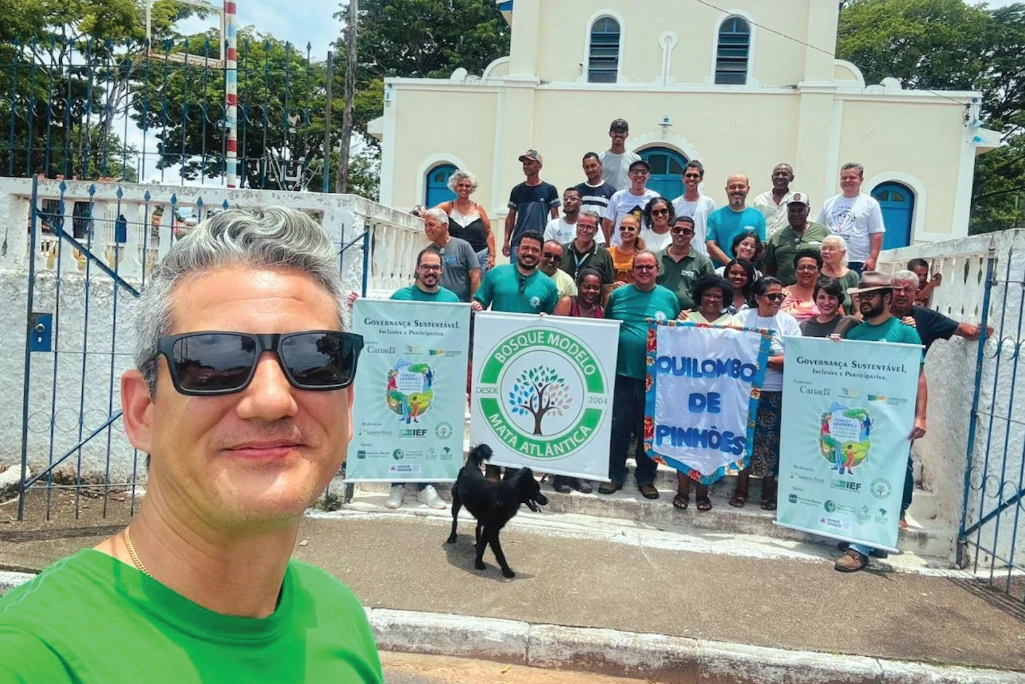
Leonardo Diniz Reis Silva has a vision for his region. The Brazilian public policy specialist who works for a provincial forest institute wants to see the area’s critically important nature come back from the brink.
The tropical Atlantic Forest, or Mata Atlântica in Portuguese, which extends down Brazil’s coastal region into Paraguay and Argentina, is in critical condition. Once covering 1.3 million square kilometers, it has been reduced by 85% through deforestation. Much of what remains is fragments, and the wildlife and communities that depend on it suffer from the loss.
But Diniz and his colleagues think they have a path to durable forest protection and perhaps even regeneration. They want to unite people who rely on and love the forest to plan a more sustainable future. They believe Integrated Landscape Management (ILM) offers the roadmap to make that happen.
“So we started talking with people throughout the landscape four years ago,” Diniz said. “We didn’t start with a big budget or a perfect plan. What we had was a commitment to listen – to farmers, traditional communities, local leaders – anyone who cared about the Mata Atlântica.”
About Integrated Landscape Management
Integrated Landscape Management (ILM) is a collaborative approach where diverse stakeholders – including farmers, businesses, conservationists, and local communities – work together to manage land, water, and natural resources within a specific area. This method balances and achieves multiple objectives, such as sustainable agriculture, ecosystem conservation, and improved livelihoods. ILM addresses complex challenges like climate change, food security, and biodiversity loss by fostering cooperation across different sectors and land uses. This approach ensures the needs of both people and the environment are met harmoniously.
Concerned residents had already joined together to conserve Mata Atlântica through the Latin American Model Forest Network, which convenes individuals and groups to realize a shared vision of sustainable development at the heart of ILM. In recent years, the Mata Atlântica Model Forest (MF) and the rest of the network started working with EcoAgriculture Partners to move forward. They joined a workshop in 2024 held in Brazil for Latin American Model Forest leaders to build the skills needed to implement ILM.
Later that year, the Mata Atlântica MF applied for and earned US$5,000 in seed funding from EcoAgriculture Partners and Natural Resources Canada “to work toward sustainable, inclusive, and participatory governance.”
From idea to reality
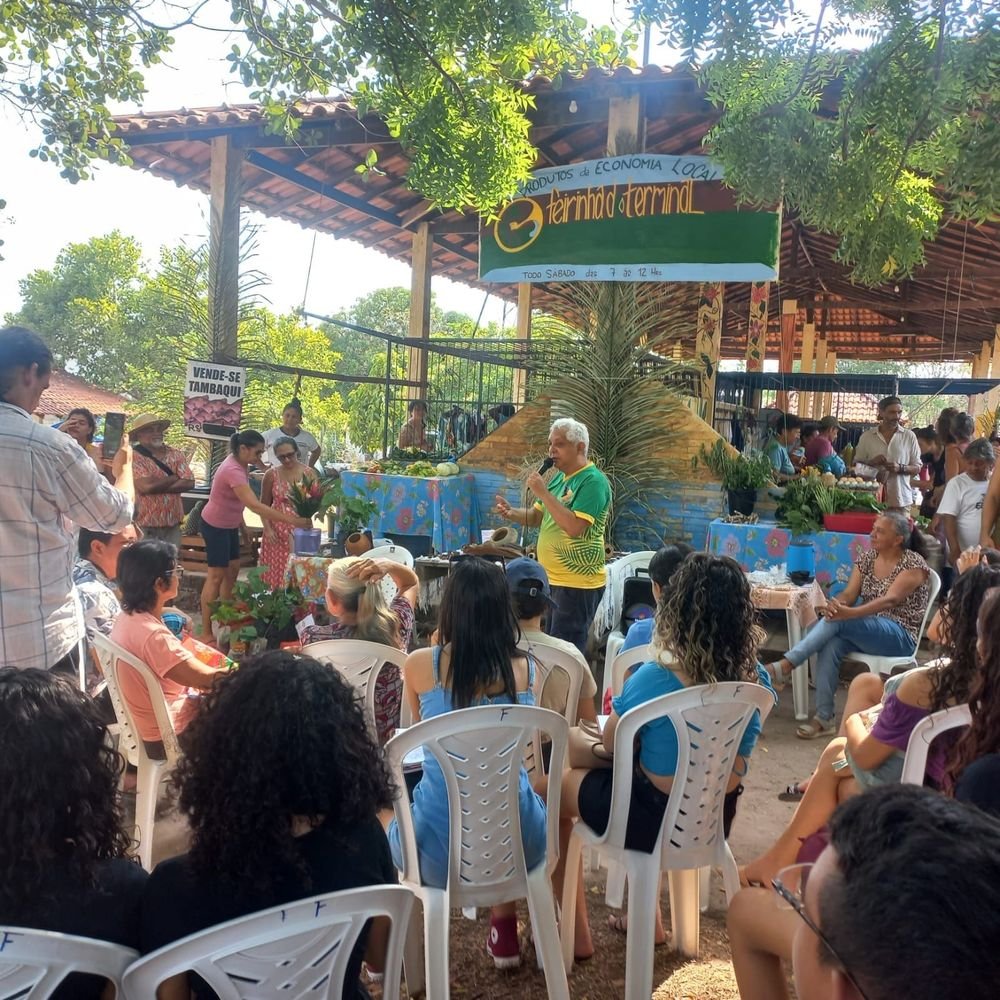
7th Bioeconomy Fair of Tapajós organized by the Amazonas Tapajós (FLOMAT) Model Forest, September 7, 2024.
What can $5,000 do? If you ask Diniz and the 14 other leaders who secured the seed funding, the answer is: Quite a lot.
Diniz’s vision took a big step toward becoming real about 350 kilometers northwest of Sao Paulo, on a church patio in the rural enclave of Pinhões, surrounded by fragments of the Atlantic forest.
Plastic chairs scraped across the tile floor as residents filtered in – farmers, elders, and youth, all members of the Quilombola community of descendants of enslaved Africans. At the front of the room stood a paper easel, already half-filled with colorful marker sketches and sticky notes mapping out water sources, forest edges, and dreams for agroforestry plots.
The gathering brought together women-led associations, smallholder farmers, and traditional cooks who dreamed of turning their food culture into sustainable tourism. “This wasn’t just a meeting,” Diniz said. “It was the first time many of these groups had sat at the same table, sharing their visions, realizing that their goals weren’t so different.”
This was one of three community meetings and a final gathering, each a carefully facilitated dialogue powered by the small but catalytic seed funding that brought together around 100 concerned community members.
The room buzzed with possibility. By the end of the last convening, nine grassroots proposals had emerged, from electrification in a remote rural zone to luring food tourists and forming a cooperative to boost banana prices. What started with conversations ended with a shared roadmap.
About the Latin American Model Forest Network & Seed Funding Initiative
The Latin American Model Forest Network (LAMFN) connects landscapes across the region through a shared commitment to collaborative, sustainable management of forests and natural resources. Each Bosque Modelo (Model Forest) brings together diverse stakeholders, local communities, government agencies, NGOs, and private sector partners, to tackle environmental and socio-economic challenges holistically and inclusively.
In 2024, EcoAgriculture Partners and the International Model Forest Network launched a seed funding initiative with funding from the Government of Canada to support locally led innovation in Integrated Landscape Management. Investments of up to US$5,000 helped 15 Model Forests design and implement pilot projects, build partnerships, and advance shared stewardship of their territories.
The seed grant recipients were:
- Bosque Modelo Abancay – Peru
- Floresta Modelo Amazonas Tapajós (FLOMAT) – Brazil
- Bosque Modelo Chiquitania Sostenible – Bolivia
- Bosque Modelo Chocó Andino – Ecuador
- Bosque Modelo Chorotega – Costa Rica
- Floresta Modelo Hileia Baiana – Brazil
- Bosque Modelo Los Altos – Guatemala
- Floresta Modelo Mata Atlântica – Brazil
- Bosque Modelo Nacional de Puerto Rico – Puerto Rico
- Bosque Modelo Panguipulli – Chile
- Paisagem Modelo Pantanal – Brazil
- Bosque Modelo Pichanaki – Peru
- Bosque Modelo Risaralda – Colombia
- Bosque Modelo Tucumán – Argentina
- Bosque Modelo Mosaico Sertão Veredas Peruaçu – Brazil
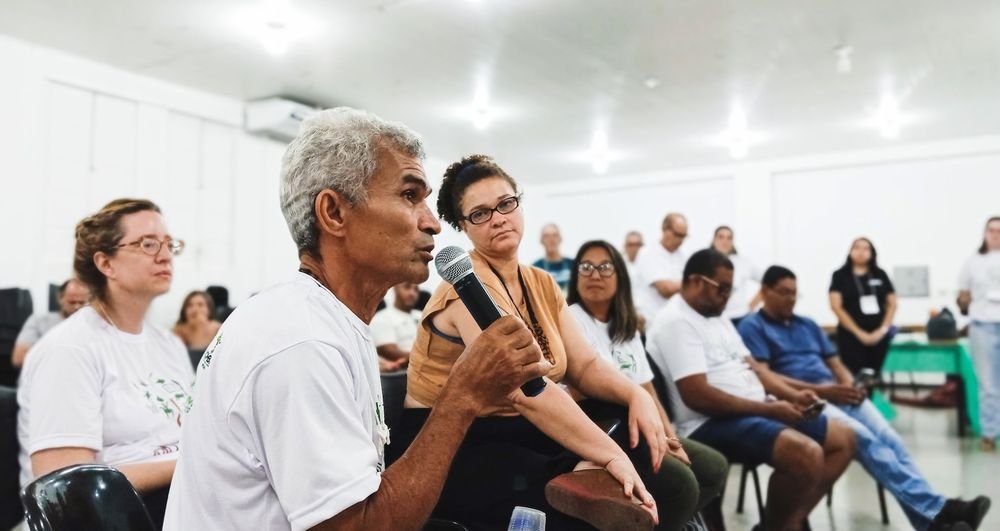
Integrated Landscape Management Workshop for the Advisory Board of the Mosaico Sertão Veredas-Peruaçu Model Forest, February 5, 2025.
Small but mighty
The seed funding program’s idea was simple but powerful: Equip landscape stewards, often under-resourced but deeply committed, with a modest budget and let them run with it. The result? A diverse tapestry of grassroots innovation surfaced across Latin America to protect and regenerate critical ecosystems and livelihoods. In implementation, each investment opened the door to a micro-laboratory for change. The focus of each project rested squarely on strengthening the foundations of landscape governance, shared understanding, inclusive participation, and collective visioning.
Let’s zoom into a few other standout examples.
Also in Brazil, the Floresta Modelo Amazonas Tapajós (FLOMAT) project translated Integrated Landscape Management (ILM) principles into practice through targeted activities. These included a Dialogue Table convened in Santarém, a structured training program, and participation in the 7th Bioeconomy Fair of Tapajós. Local leaders remained actively engaged despite experiencing one of the most severe droughts in recent memory. The project catalyzed several concrete outcomes: establishing the Academic League of Integrated Fire Management, developing new environmental education and public health partnerships, and a renewed commitment to sustainable livelihoods through bioeconomy initiatives.
In Puerto Rico, the Bosque Modelo Nacional utilized its seed funding to facilitate participatory workshops to strengthen collective vision and institutional cohesion. The initiative, titled “Mirar al Bosque” (“Look at the Forest”), brought together members of the Multi-sectoral Table (Mesa Multisectorial) to reflect on the forest’s role in regional development and community well-being. Participants represented a diverse cross-section of society, including 15 public and civil society entities engaged in natural resource management, economic development, and cultural preservation.
In Guatemala, the Bosque Modelo Los Altos directed its seed funding toward strengthening inclusive governance mechanisms. Forest leaders signed eight collaborative agreements with municipal governments and local stakeholders. A series of participatory workshops supported actor mapping and encouraged reflection on a shared landscape vision. The project’s technical team was intentionally structured to ensure gender equity, setting a precedent for more inclusive and representative leadership.
In the Mosaico Sertão Veredas Peruaçu of Brazil, a region encompassing critical cerrado landscapes, the seed money was used to develop a short documentary showcasing the region’s evolving approach to integrated governance. The project also convened a workshop focused on strategic alignment. It established thematic working groups in agroecology, integrated water management, and community-based tourism initiatives that communicated the forest’s significance and outlined pathways for collaborative stewardship.
The Bosque Modelo Chiquitania Sostenible in Bolivia focused on institutional renewal. The project supported the creation of new territorial committees, facilitated dialogue with municipal officials, and laid the foundation for a more inclusive governance platform. A key outcome was the development of a regional agenda informed by local needs and broader environmental imperatives. The project continues to expand its reach through partnerships with regional conservation organizations and thematic working groups under development.
At its heart, this seed investment program is a bet on local knowledge and leadership. And it’s paying off. Whether through strengthening fire response networks in the Amazon, formalizing policy relationships in the Andes, or animating collective memory in Puerto Rico, these Model Forests are turning small investments into durable, people-centered progress.
What’s next? Many projects are already hunting follow-on funding, formalizing alliances, and integrating ILM into regional strategies. The seeds have been planted, and now the landscape itself is growing into something stronger, greener, and more just.
Patricia Bonn, EcoAgriculture Partners senior program manager who leads the seed-funding program, said she has been amazed by how model forests have turned these small seed investments into catalytic action. Beyond the projects forest leaders implemented, the money got other organizations involved in the landscape to pitch in their support and additional funds.
“This is how landscape transformation starts: with trust, commitment, and a little bit of support at just the right moment,” Bonn said.
“What impressed me most in this process is that, while these grants were small, they were deeply catalytic. It was incredible to see how much local leaders accomplished with them, and just as exciting to see how they opened doors for other organizations in the landscapes to match funds and renew their support. This is how landscape transformation starts: with trust, commitment, and a little bit of support at just the right moment.” – Patricia Bon, EcoAgriculture Partners