
San Martin is an ecologically and biodiverse rich area in Peru
Within its boundary lies the Andean Plateau, where rugged ridges eventually turn into canyons and rivers flow through the land. Its waters connect communities and ecosystems as they run past farmers, city dwellers and on through portions of the Amazon rainforest.
Despite the region being one of the most deforested areas in the Peruvian Amazon, it is also one of the most ecologically rich. Its ecosystems provide essential services for people and wildlife, including water filtration, climate change mitigation, flood control and habitat. But these critical ecosystems are threatened by the expansion of infrastructure, population growth and expanding coffee, cocoa, rice and livestock production.

Someone holding freshly opened cacao fruit with its flesh visible and variety of jungle, tropical fruits and ingredients in the background from San Martin, Peru
Climate change is also impacting San Martin. In fact, the region has seen devastating consequences from more extreme weather and temperatures. It has also suffered through climate-induced changes in its hydrological cycle, leading to more frequent droughts and bouts of heavy rain, which consequently cause more flooding.
San Martin is like many places worldwide where the need to mitigate climate-change impacts grows each year. People in many sectors there work on climate mitigation strategies to preserve their livelihoods and conserve the environment. One strategy available to them is ecosystem-based adaptation (EbA), which harnesses the power of nature-based solutions and ecosystem services to combat climate impacts. According to the UN Environment Programme, EbA projects can include activities such as protecting coastal habitats like mangroves, which provide natural flood defense; replanting deforested areas, which can reverse desertification and recharge groundwater supplies; and restoring or conserving water bodies like rivers and lakes, which offer natural drainage to reduce flooding.
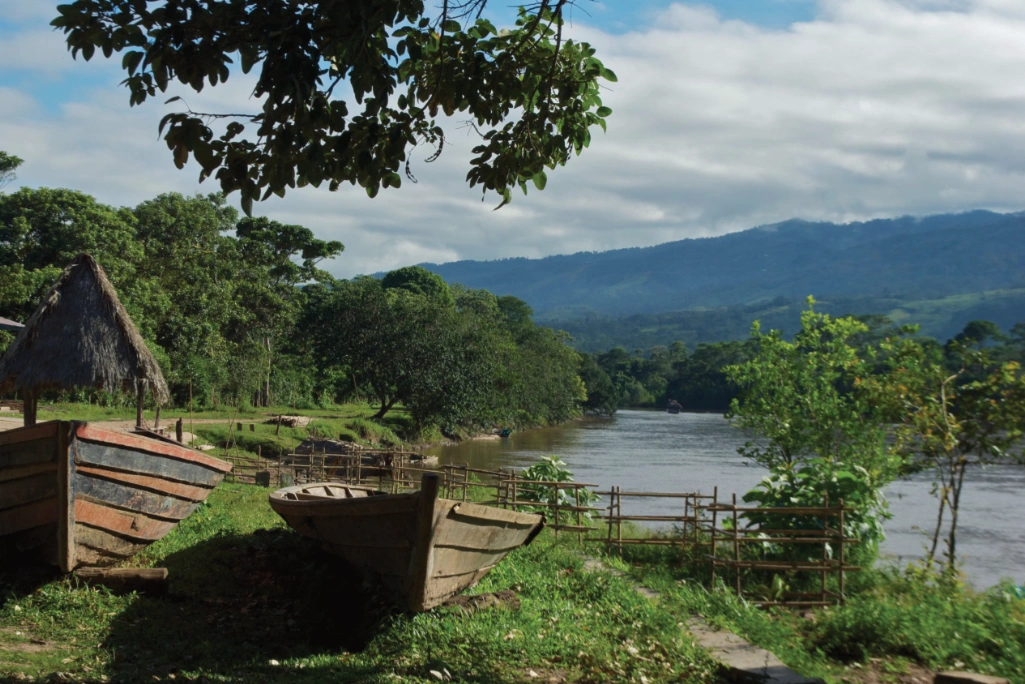
The Mayo river in the Moyobamba jungle of San Martin, Peru
Such EbA projects can have multiple benefits. As one example, they can provide habitat for fish and conserve forests and biodiversity while improving people’s income and mitigating climate change. Sara Scherr, CEO and president of EcoAgriculture Partners, said, “The investment world must fund projects contributing to an integrated landscape strategy. Doing this will connect climate change adaptation and mitigation with sustainable food production and forest management to help biodiversity thrive while strengthening community welfare. EbA projects can catalyze these efforts.”
New grant to help communities run EBA projects
While EbA projects offer benefits for people, wildlife and ecosystems, it has been difficult for communities to secure this type of funding. That’s why, through its co-convened initiative, 1000 Landscapes for 1 Billion People (1000L), EcoAg and its partners have already begun developing financing strategies and mechanisms for landscapes to apply for, coordinate and manage EbA investments.
And now, with a $250,000 grant provided by the Global EBA Fund, the initiative will test and improve these tools to help San Martin perform bold EbA activities over the next two years. This new grant will help 1000L create an adaptable finance model to help secure regional funding for landscape projects worldwide. The project in San Martin will identify actions that will most benefit adaptation efforts and provide co-benefits for climate change mitigation, job creation and livelihood security for vulnerable groups.
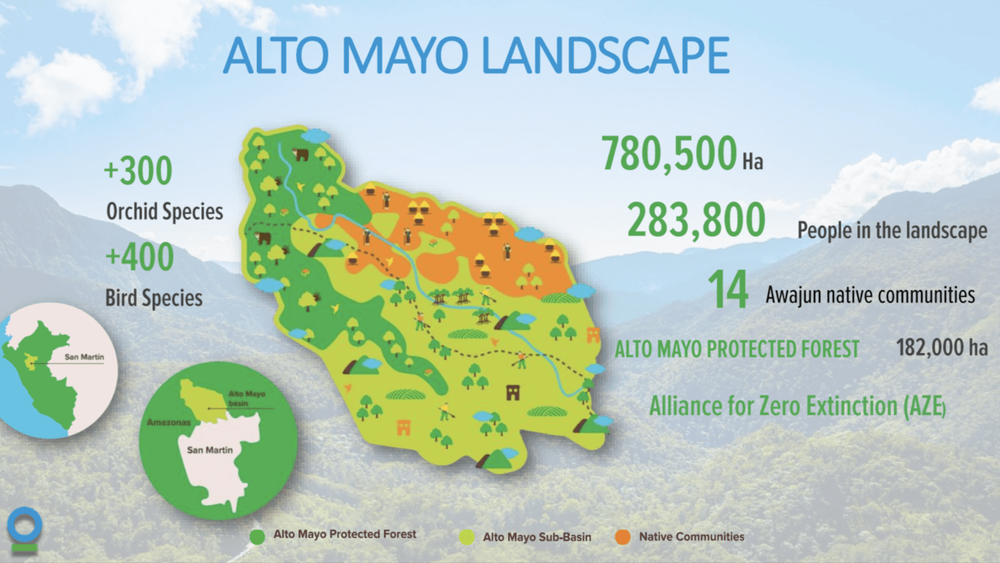
Infographic of the Alto Mayo landscape and San Martin, Peru from a Conservation International presentation on the landscape size, demographics and biodiversity metrics.
EcoAg Program Manager Juan Ramos says 1000L will use the EbA funding to convene landscape finance planning experts and apply that knowledge and research to refining EbA tools. To begin, the group will investigate the entire San Martin region through the lens of landscape finance planning for particular financial characteristics. The experts will look closely at landscape-scale financial risks and returns related to specific projects. They will then use that information to develop one or more finance mechanisms. Each will get a financial plan supporting on-the-ground activities while meeting investors’ needs.
In San Martin, 1000L will connect the regional government’s sustainability objectives-like halting deforestation-with an investment plan that defines the actions that landscape actors need to take to help meet investor needs. Seth Shames, EcoAg’s managing director and 1000L’s finance design team lead, said, “Investment plans like these have a higher probability of generating large-scale, sustainable funding than the typical one-off grant proposals. This innovation allows for long-term sustainable solutions to environmental degradation and environmental impacts.”
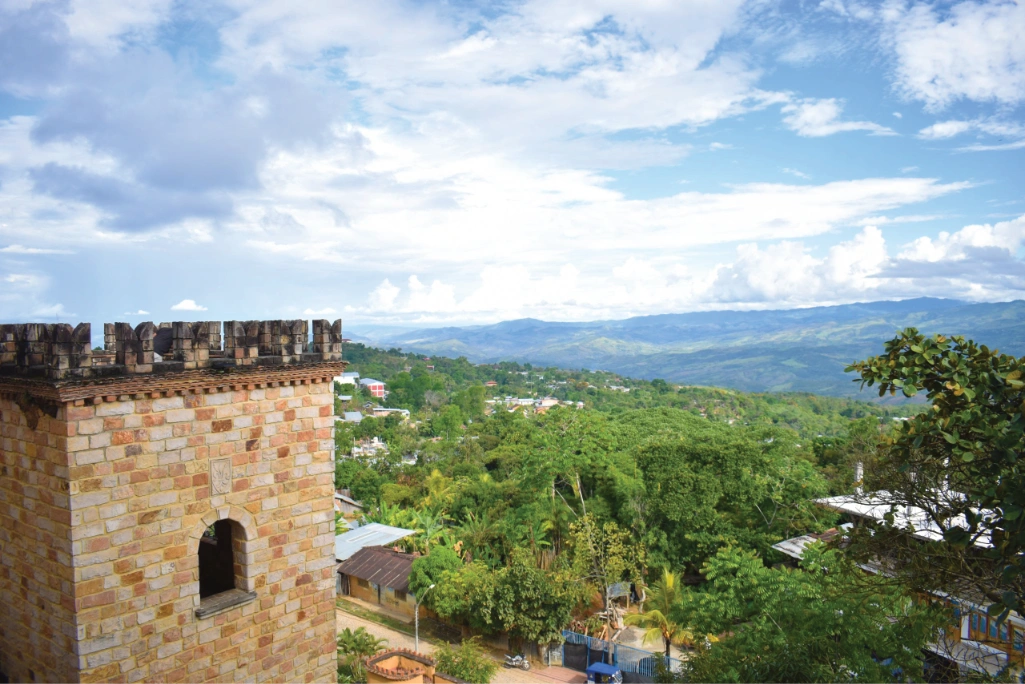
Landscape views from Lama Castle in San Martin, Peru
San Martin’s rural residents and communities will benefit greatly from expanding these mechanisms and solutions. Further, financing solutions will ensure equitable and inclusive participation for everyone, from indigenous communities to government officials. Aaron Bruner, the sustainable landscapes & seascapes economics fellow with 1000L core partner Conservation International, said, “San Martin is a global leader in working towards sustainable development in the context of climate change. The Global EbA Fund will support these efforts by tying to state-of-the-art thinking about how to engage a diverse set of financiers to drive large-scale change.”
Landscapes offer the best chance for EbA projects
With increasingly extreme and unpredictable climate change impacts, effective conservation solutions require addressing the links between agriculture, forests, water, biodiversity and energy, as well as how social, economic and political challenges influence the whole picture.
Solving challenging global issues such as climate change and biodiversity loss will require collaboration between different sectors and stakeholders, from farmers and land managers to policymakers, civil society organizations, business leaders and investors. “Through Integrated Landscape Management, we have seen communities in regions like San Martin grow stronger while collaborating to adapt to climate change,” said EcoAg’s Scherr. “They gain more access to needed financial resources. Government policies begin to reflect and meet the needs of citizens. And both people and nature begin to thrive.”