

Local experience sets the stage
So far, the financial sector has played only a minor role in helping society address climate change, land degradation and biodiversity loss. But experts at this year’s Global Landscapes Forum (GLF) 6th Investment Case Symposium say that may be about to shift, and there is no time to waste.
The event, which focused on confronting challenges and discussing solutions for climate, environmental and human well-being, convened investors, finance experts, project developers and community leaders. EcoAgriculture Partners (EcoAg) joined IUCN-Netherlands, Landscape Resilience Fund, the Dutch public-private development bank FMO and others during a critical panel. Their focus: transforming the finance system to strengthen its role in addressing the world’s most pressing issues.
The “Addressing the Complexity of Directing Sustainable Climate Finance to the Global South” panel featured case studies from around the world. Presenters also discussed a soon-to-be-published paper from EcoAg on how integrated landscape finance (ILF) can inform the implementation of the landmark Global Biodiversity Framework (GBF) adopted in Montreal last year.
Local experience sets the stage
To kickstart the panel, the group showcased challenges and successes local leaders faced while working within their landscapes. Tropical forest-focused nonprofit Tropenbos-Indonesia reported that Indonesian rubber farmers still struggle with an unstable market, low productivity due to climate change and increased competition from other more profitable industries such as palm oil. Another Indonesian group, the Jepara Wood Craftsmen Association, shared their success with a new online tool that connects them directly to investors, which helps with some of their financing problems. Groups from Zambia and Brazil also described their struggles to secure funding.
Jan Willem Den Besten, senior advisor on green finance for long-time EcoAg collaborator IUCN-Netherlands, presented work by EcoAg on what we have learned while developing ILF models. This emerging finance approach supports multi-project, multi-sector investment portfolios that encourage linking investments to generate impacts at scale across a landscape. Based on ILF experiences, EcoAg, with its partners, is developing recommendations that inform the development of National Biodiversity Strategies and Action Plans (NBSAPs) and National Biodiversity Finance Plans (NBFPs). These plans define conservation threats and strategies to create actions that simultaneously boost conservation and socio-economic development. Den Besten presented six recommendations governments can follow to nurture ILF within their borders.
- Align financial flows that work for biodiversity, climate, land restoration and economic development by coordinating with stakeholders in various sectors.
- Create plans that work for a specific area’s conservation and sustainable development needs.
- Promote finance models that prioritize long-term sustainability.
- Mobilize private investment for multi-sector plans that benefit biodiversity.
- Strengthen regional institutions for long-term collaborative financial planning and implementation.
- Develop technical guidance and capacity development for countries to align their NBSAPs and NBAPs with the GBF’s strategy.
Den Besten noted there are many challenges when developing national strategies and action plans, and these recommendations provide solutions for issues that may arise. “These plans are real opportunities for different sectors to work together and plan action,” he said. “It allows all sectors in a landscape, various government departments and groups on the ground to link their work together. It is a perfect opportunity to learn from integrated approaches.”
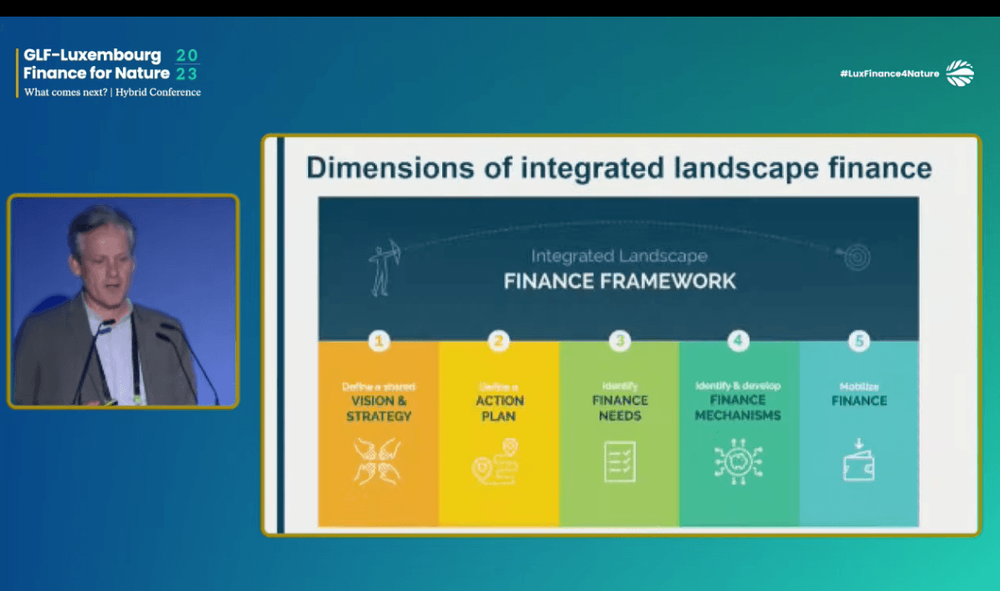
Jan Willem Den Besten presenting at the Global Landscape Forum 6th Investment Case Symposium on 7 March 2023
This work built upon a recent study by EcoAg, Tropenbos International, and the Center for International Forestry Research (CIFOR) on redirecting finance to smallholder producers, such as those who presented their experiences in Indonesia, Zambia and Brazil earlier in the event. Seth Shames, EcoAg’s managing director and the finance lead for the 1000 Landscapes for 1 Billion People initiative, said, “This research informs people who prioritize financial support for small-scale producers in the context of landscape partnerships.”
Create networks to answer existential challenges
The panel agreed that the finance industry must work with communities and local leaders to solve their immense financing challenges. A participatory approach is crucial. Yet the funding gap for small-scale producers is increasing, said Inna Bilshchuk, the Landscape Resilience Fund’s bankable project officer. “Accessing funds for smallholders is challenging, yet they produce one-third of the world’s food,” she said. “Their funding demands continue to rise, and the funding gap is quite substantial-only about one-third is currently met.”
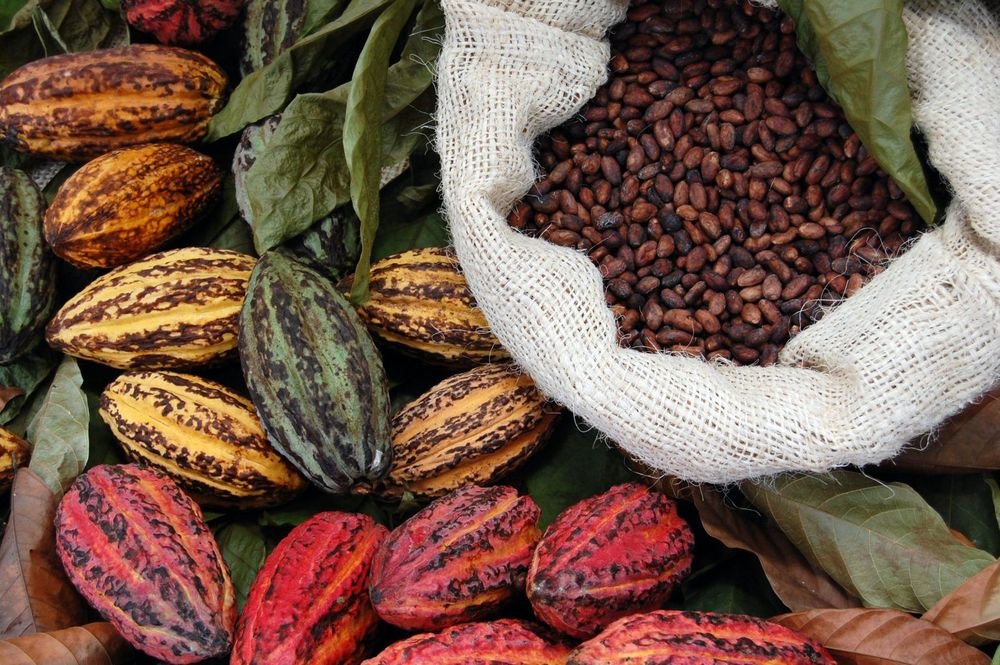
Cocoapods
Addressing local and global challenges, the speakers noted, demands that different actors who play a role in a landscape understand each other and their respective roles. Floor Van Oppen, FMO’s fund manager for mobilizing finance for forests, provided her perspective from the finance side. “We need to see the business case, the amount of money we are asked for, and how it will be returned,” she said. “Very often, parties contact us with a wonderful impact story, but they look to us to develop the business case, and we cannot do that for them. That is where they need the help.”
The panel agreed that mobilizing finance and other support to where it is needed most should be a priority. Small-scale producers who sustainably produce foods, goods and services need more help in the forms of increased funding and policies that enable their businesses to develop. With that said, they will be in a much stronger position to generate positive socio-economic and environmental outcomes for their communities and the world.