
At global climate conferences, the language of finance often moves in millions and billions. Funds are announced, investment gaps are calculated, and institutions debate how to allocate resources toward forests, food systems, and communities on the front lines of climate change.
Yet in many landscapes, the first barrier is not only the absence of large-scale capital. It is the absence of the relationships needed for that capital to land well.
A landscape can have urgent priorities and willing partners, yet still struggle to move forward when stakeholders work from different maps or histories of conflict. Before long-term investment can support transformation, people often need a place to meet, a process to follow, and a reason to believe collaboration is possible.
Governance work of this kind is often overlooked by traditional funding. Its results are less visible than hectares restored or trees planted, and they can be harder to capture in conventional impact reporting. Yet without it, even well-funded interventions can struggle to take root.
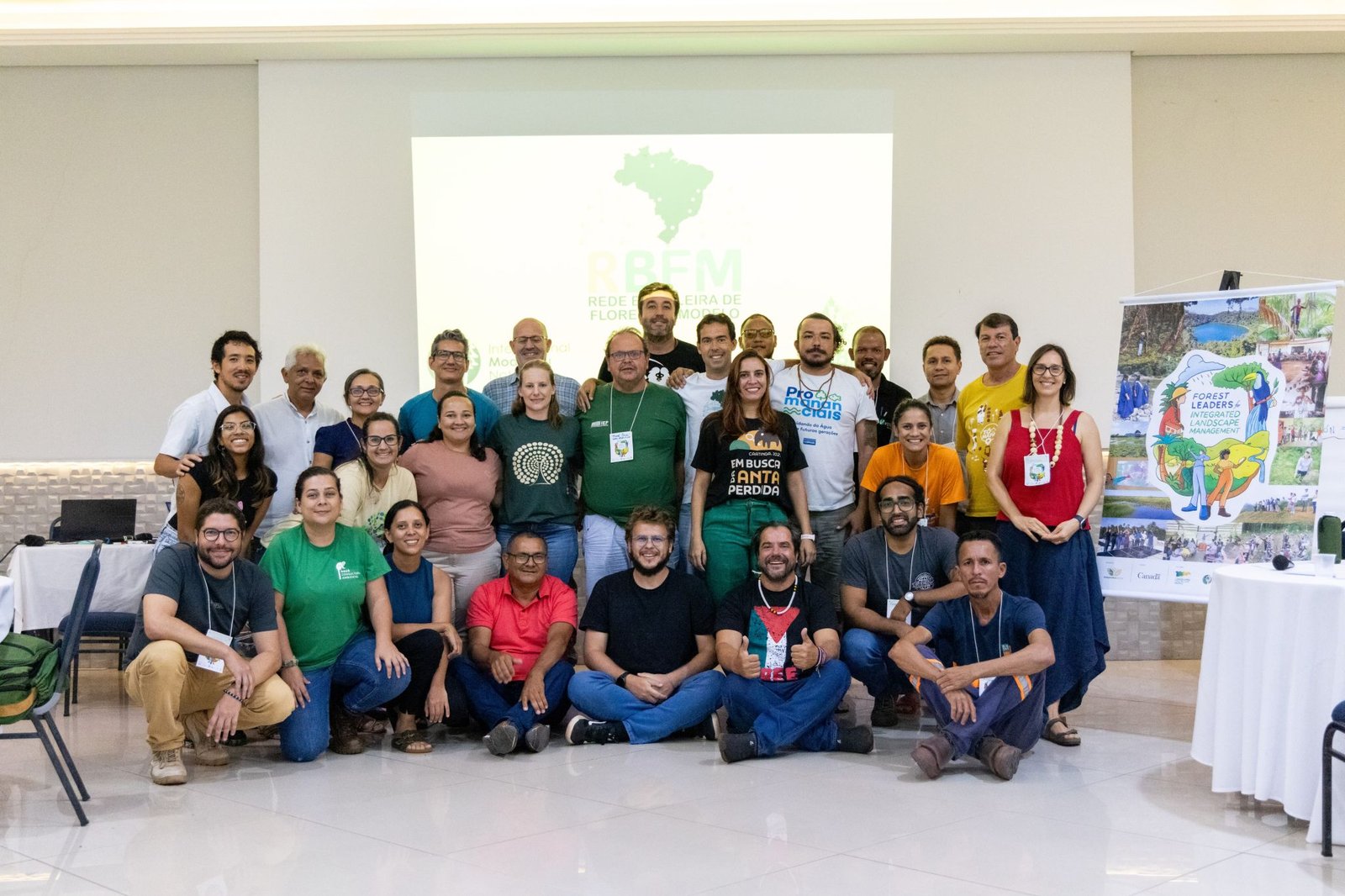
The Seed Grants Program grew out of EcoAgriculture Partners’ Forest Leaders for Integrated Landscape Management project, supported by Natural Resources Canada through the IMFN Climate initiative. EcoAg worked directly with participating Model Forests to implement the grants, with support from the Latin American and Brazilian Model Forest networks.
Each participating Model Forest received two cycles of a US$5,000 seed grant, accompanied by training, technical mentorship, and peer exchange. The grants were not designed to fund isolated activities. They were designed to support the governance infrastructure and integrated management of landscapes. In some territories, that meant reopening conversations that had stalled. In others, it meant clarifying governance roles, strengthening local platforms, reviewing boundaries, or developing strategic plans. The grant often paid for the first step that no larger investment could skip: bringing the right people into a structured process around a shared territory. Download this report to learn more about what each model forest did with the seed grant.
Across 15 Model Forests, the grants supported more than 200 in-person territorial activities and engaged over 4,200 people. But looking past the activities themselves, the process offered a rare look at what it actually takes to make Integrated Landscape Management work in practice. EcoAg spent months systematizing these field experiences by analyzing interviews and project reviews from the ground. Here are some of the standout insights from that analysis.
Landscape progress does not follow a fixed sequence.
The Model Forests began from different places and advanced in different ways. Some had established governance bodies but needed to broaden participation. Others had active local initiatives but lacked a shared plan. In some landscapes, planning moved ahead before formal governance structures were in place. In others, rebuilding relationships was the most important first step.
This showed that Integrated Landscape Management is not a linear process. A fixed sequence of steps cannot account for each territory’s history, institutions, and opportunities. Landscape teams need a clear direction, but they also need the flexibility to respond to what their territory is ready to do.
For Omar Buendía of the Pichanaki Model Forest in Peru, ILM helped the local team rethink how it worked: “ILM showed us how to do it. How to do it in a more organized way, more systematically, perhaps more methodologically, you could say. It gave us, as Model Forests, the possibility and the opportunity to reorient, reorganize, and rethink how we are moving forward as a proposal and as a process in our territory.”
Governance grows through shared action.
A committee or platform can provide a space for collaboration, but establishing a structure does not automatically build trust. Governance develops gradually as actors meet, follow through on commitments, make decisions transparently, and produce visible results together.
Trust was therefore both a condition for the work and an outcome of it. In Brazil’s Hileia Baiana Model Forest, the grant brought together actors who worked in the same territory but rarely coordinated. The first workshops led to new communication channels through which participants continued discussing restoration and biodiversity conservation.
“The seed projects were truly catalytic,” said Renata Lopes of Hileia Baiana. “They were what allowed us, in practice, to understand governance and how to approach it fully.”
The experience also showed that landscapes do not begin from zero. Territories already contain relationships, community groups, public institutions, councils, and other forms of coordination. The strongest processes recognized these assets and built on them instead of creating new structures that duplicated what was already there.
Dialogue needs to lead somewhere
Bringing stakeholders together was essential, but dialogue alone did not guarantee progress. Meetings were most useful when they had a clear purpose and a pathway toward decisions.
In Peru, the Abancay Model Forest used the grant to bring actors together around community-based wildfire prevention. The process led to the formation of a coordination committee with a three-year mandate. What began as dialogue around a recurring threat became a structure for acting before the next emergency.
“Although small in scale, the seed fund had a very significant impact,” said Yésica Quispe of the Abancay Model Forest. “It allowed us to bring actors together through this landscape perspective and establish a coordination committee with a three-year mandate.”
Small, visible results like this helped sustain participation. They did not resolve every structural problem, but they showed stakeholders that collaboration could produce something useful and gave them a reason to remain involved.
Training worked because it was connected to practice and practice worked because it was connected to training
The grants were most effective because they were one part of a wider learning process. Training introduced ILM concepts and tools. The seed grants allowed participants to apply them to real territorial challenges. Mentoring helped teams clarify objectives, adapt methods, and decide what was feasible within their time, budget, and institutional context.
This combination helped participants move beyond understanding ILM in theory. They learned how to use it when stakeholders had competing priorities, when original plans needed to change, or when existing institutions offered a better route than creating something new.
Peer exchange reinforced that learning. Through the regional community of practice, leaders compared experiences, discussed common challenges, and saw how ideas from one Model Forest might be adapted in another. Regular interaction also reduced the isolation that landscape leaders can experience when working in distant territories with limited support.
The process highlighted an ongoing challenge. Participation remained concentrated within relatively small groups in several landscapes. Indigenous communities, private-sector actors, public institutions, women, and young people were not represented consistently. General invitations were rarely enough. Different groups required engagement strategies that reflected their interests, influence, availability, and barriers to participation.
What the seed grants prove
The honest lesson from the Seed Grants Program is that $5,000 cannot sustain a landscape process by itself. It cannot replace long-term institutional commitment or the deeper finance needed for implementation.
But it can start something essential.
It can bring people into the same room after years of fragmentation. It can help a council see its own gaps. It can turn a wildfire problem into a prevention partnership. It can help communities clarify boundaries, develop plans, and build the confidence to work together.
For climate funds, public agencies, private investors, and philanthropic partners, that is the challenge the program leaves behind. The seed grants helped build platforms, clarify priorities, and strengthen trust across 15 Model Forests. Those platforms now need deeper support.
True climate resilience in Latin America will not come only from large commitments made far from the landscape. It will also depend on smaller, well-placed investments that help local leaders do the work that makes larger change possible.
The Seed Grants Program showed that when modest resources are paired with accompaniment and local leadership, collaboration can move from an idea into a working practice. That is the spark. The next task is to keep it burning.