
Global perspective provides useful view of problematic trends, but understates local challenges and over-emphasizes top-down solutions.
Last week I raised three key issues with the EAT-Lancet Commission’s report calling for a “Great Food Transformation.” In today’s post I tackle the issues that arise when a global perspective is applied to the local conundrums of food systems.
The EAT-Lancet Commission’s report uses a global framework that allows a useful birds’ eye view of the extent of problematic trends, and their interaction effects, that may not be fully appreciated at lower scales. The “safe operating space” for food systems is defined in terms of planetary stability. Certainly, over the long term, the global scale is of most validity when assessing the survival of human civilizations and wild biodiversity.
But it is also essential to define “safe operating space” at national and sub-national levels, which are the valued local homes of the global population. Only at these scales can we effectively appreciate and address the vast differences between how communities are impacted by food systems. People living in every landscape, territory, and jurisdiction need to set their own targets that assure resource-based livelihoods, thriving biodiversity, clean and abundant water, and climate change adaptation. This implies that even more ambitious targets are needed at lower levels (as was done to some extent in the report, around evaluating water basins).
Triage is not cure
Focusing on the global perspective also encourages a global ‘triage’ approach that is epitomized in the report’s “Half Earth” recommendation – that half of the Earth, by biome, be protected “as intact ecosystems.” Yet in many of these biomes, considerable human activity can still be compatible with ecosystem health, with the right production systems in mosaic with protected areas. The serious implications of Half Earth for livelihoods, migration, and democratic decision-making are not discussed.
In fact, human activity is already undermining even relatively unoccupied ecosystems. The Arctic, most isolated Amazonia, coral reefs, and the deepest ocean depths all show signs of degradation and extinction caused by climate change and man-made pollutants. A Half Earth strategy, at its worst, creates a sort of psychological sponge for civilization’s effluent: inevitably risking health and wellbeing of marginalized humans as well. To overcome this, we need to localize planning of land use mosaics. Global data and targets can guide, but local needs and values (informed by local knowledge and robust data) must determine to what uses and for whom to put our hills, fields, and streams.
Devolution, not top-down decision-making
Over-emphasizing the global action agenda also means that the role of actors who operate at the global level – multinational food, agribusiness and extractive industries; global environmental organizations; international financial institutions – is over-emphasized. It just seems ‘easier’ to accomplish goals through them than to negotiate with and enable local actors. But too many national food and sustainable land management strategies that were designed in capital cities by national governments, international donors and international companies have failed to deliver. And this approach contradicts widely accepted democratic political principles of devolution, decentralization and subsidiarity. Moreover, the Sustainable Development Goals were agreed goals not for the planet as a whole, but are to be achieved in every country–and every landscape.
Integrated Landscape Management: Finding local solutions, informed by global knowledge
Widespread experience in Integrated Landscape Management offers rich practical guidance and lessons learned about integrating strategies and investments for sustainable diets, production and environment. It is the scale where ‘top-down’ can exchange ideas and negotiate with ‘bottom-up’. The right global action could empower and enable food system innovation at large landscape scale (territory, jurisdiction, bioregion, watershed, city-regions, biological corridors, et al).
See, for example the Landscapes for People, Food and Nature Initiative white paper on how Integrated Landscape Management can help us achieve the Sustainable Development Goals and the recent brief from CIRAD and others on the need for a Territorial Approach to sustainable development. These are the building blocks for a new integrated food system. Already there are exciting innovations linking supply chains (vertical) with multi-stakeholder landscape planning and action (horizontal).
To truly generate a Great Food Transformation, we need to bring landscape partnerships into the global conversation, learn from their visions and solutions, and work with them to co-design the international, national and local actions that are needed.
Check back tomorrow for my final comments on the EAT-Lancet Commission report, focusing on why we need to bring the voices of farmers, pastoralists and fishers into the center of the conversation on food system transformation.
Missed the first two posts in this series? Find them here and here.
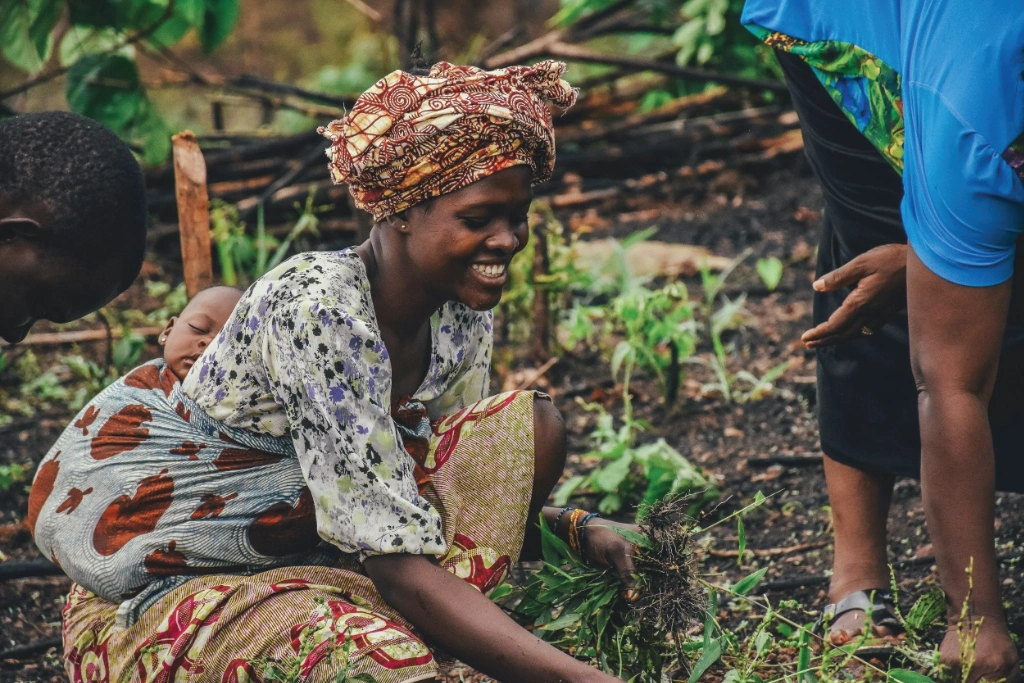
Photo by Annie Spratt on Unsplash