
The Evolving Landscape of Agricultural Biodiversity Conservation
Region of Focus
Overview
Biodiversity as a means to livelihood improvement
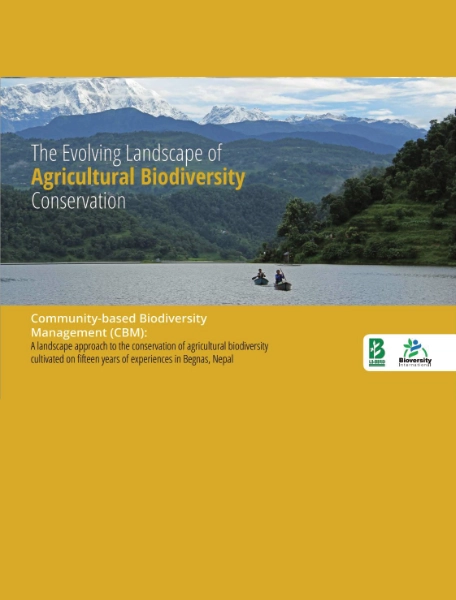
Community-based Biodiversity Management (CBM) is an emerging landscape approach to agricultural biodiversity conservation. CBM seeks to encourage the custodianship of land and agricultural biodiversity as a means for improving livelihoods of local communities. Local Initiatives for Biodiversity, Research and Development (LI-BIRD), in collaboration with national and international research organizations, has been developing CBM through participatory action research projects in 15 districts in Nepal. One compelling example of CBM is the restoration of the Rupa lake watershed in Begnas, in the Lekhnath Municipality in Kaski district of Nepal.
Four Principles of CBM
- Empower local communities to take leadership in planning and decision making
- Build on local innovations, practices and resources
- Diversify biodiversity-based livelihood options
- Provide a platform for social learning and collective action
CBM is a landscape approach
The experiences from Begnas show that on farm conservation of agricultural biodiversity depends on integrated landscape management to restore and maintain the processes of land, ecosystem and biodiversity regeneration. In Begnas, this was achieved by a landscape-wide adoption of sustainable practices to reverse soil erosion and increase productivity through mutually reinforcing activities of reforestation, diversification, apiculture, agroforestry and organic crop production. Lake restoration and land use diversification have supported the conservation of crop genetic diversity including landraces and crop wild relatives, whose habitats are now protected.
Media Type
Language
Published
27 January 2014
Authored by
Mijatovic Dunja, Neupane Sandesh, Paudel Indra, Sthapit Sajal
License
© LI-BIRD 2014. Contact info@libird.org for details.
License
License