Reducing Risk: Landscape Approaches to Sustainable Sourcing – Synthesis
Region of Focus
Overview
“The landscape approach has been championed by organisations active in the development and conservation sectors for many years, though the concept has been slow to migrate into mainstream corporate thinking. Now this report from the Landscapes for People, Food and Nature Initiative, sets out a case for companies to think about their business in landscape terms.”
– José Lopez, Executive Vice President, Operations, Nestlé S.A.
Businesses must shift focus
With a changing environmental and business landscape making the “business-as-usual model” unsustainable, companies will soon need to fully account for people and the planet to maintain profitability. While companies might see this new focus as a detriment to growth, some enterprising firms are already working with a multitude of stakeholders to increase social responsibility practices with an eye on the bottom line.
A landscape approach is needed
Through multi-stakeholder partnerships, climate finance, and regional producer support in Mexico and Indonesia, Starbucks has worked to ensure that working ethically and ecologically with local producers leads to cost reductions and a profitable pot of coffee. By looking “Beyond the Brewery”, SABMiller has been able to address operational, regulatory, and reputational risks involving water quality in Colombia and South Africa at the community level. In working with Rainforest Alliance to ensure sustainable cocoa production in Ghana, Olam International has not only been able benefit its farmers with both diversified opportunities and increased income but has also become the first company to bring climate-friendly cocoa to market.
Lansdcape approaches take sustainability beyond the farm level, where most agribusinesses focus their interventions, to the scale that includes watersheds, ecosystems, transport networks, local markets and governments, and nearby towns and cities. Only at this level can problems like water insecurity, climate change, or reputational or community engagement issues be dealt with.
“We face some very complex risks along our supply chains, all connected in some way to climate change. Addressing them only at the farm level won’t work. These problems involve too many interconnected variables.”
– Chris Brett, Head of Corporate Responsibility & Sustainability, Olam International
Report exposes best practices
This report highlights best practices from among agribusinesses in their own pursuit of reducing risk. Out of an initial scope of 27 agribusinesses that are already using landscape approaches to deal with sustainability challenges, the authors chose three companies to investigate further, Starbucks, Olam International, and SABMiller, who are each taking unique proactive approaches to dealing with environmental and social risks.
Media Type
Language
Published
24 April 2013
Authored by
Brasser André, Gross Lee, Kissinger Gabrielle
License
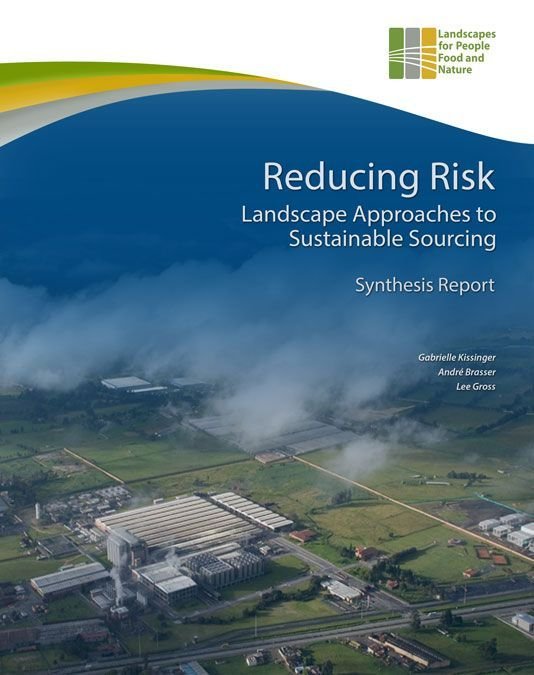
Creative Commons – BY – NC – SA Image credit: SABMiller Brewery in Bogotá, Colombia. Courtesy of Fotorudolf.com.
License
License
Related Resources
Reducing Risk: Landscape Approaches to Sustainable Sourcing – Starbucks and Conservation International Case Study
Reducing Risk: Landscape Approaches to Sustainable Sourcing – Olam International and Rainforest Alliance Case Study
Reducing Risk: Landscape Approaches to Sustainable Sourcing – Scoping Study