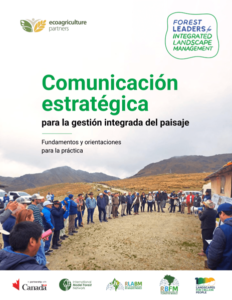
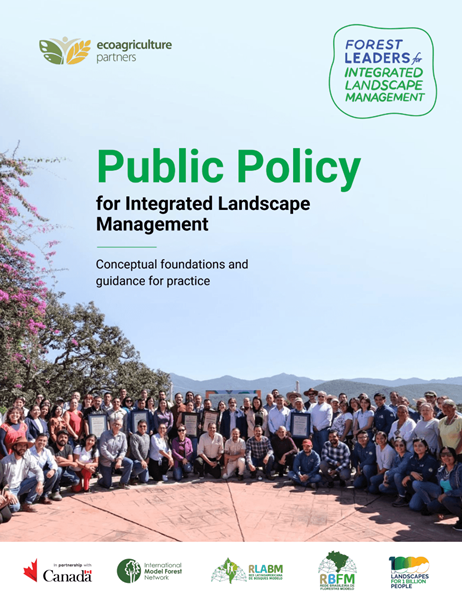
Public Policy for Integrated Landscape Management: Conceptual foundations and guidance for practice
Region of Focus
Overview
Integrated Landscape Management (ILM) is a collaborative approach to land management that looks beyond individual sectors, interests, or projects to consider the landscape as an interconnected system. It recognizes that communities, agriculture, forests, water systems, and other components of a territory are interdependent and must be managed together.
By bringing diverse stakeholders together, ILM seeks to build shared goals, address trade-offs, and coordinate actions so that environmental sustainability, climate resilience, and local livelihoods can be strengthened simultaneously over the long term.
Globally, an increasing number of countries are recognizing the landscape level as a critical scale for policy action on climate change mitigation, biodiversity conservation, ecosystem restoration, and the transition toward sustainable agricultural and food systems. As a result, these priorities are progressively being incorporated into subnational, national and international policy frameworks. Global financing mechanisms (e.g., the Global Environment Facility—GEF) and other institutions (such as international development agencies) are committing resources to address these challenges. However, in practice, many of these investments still materialize as short-term, fragmented, and relatively small-scale projects.
The importance of aligning policies to address these interconnected objectives is increasingly acknowledged. However, policymakers face significant challenges in translating broad policy commitments into practical and coordinated action, as well as bridging the gap between communities and the processes through which public policies are designed and evaluated. In this context, strategies such as ILM—which promote articulation, coordination, and participation across sectors such as agriculture, conservation, and rural development—represent an important opportunity to strengthen the connection between landscape stakeholders and decision-makers, while fostering more coherent and integrated policy implementation.
Media Type
Language
Published
22 May 2026
Authored by
-
License
Creative Commons - BY - NC - ND
License
License
Related Resources
Gestión de Conflictos en el contexto de la Gestión Integrada del Paisaje Fundamentos y orientaciones para la práctica
Gobernanza del fuego en el contexto de la Gestión Integrada del Paisaje: Fundamentos y orientaciones para la práctica
Gender Approach to Integrated Landscape Management: Key concepts and guidance for practitioners