
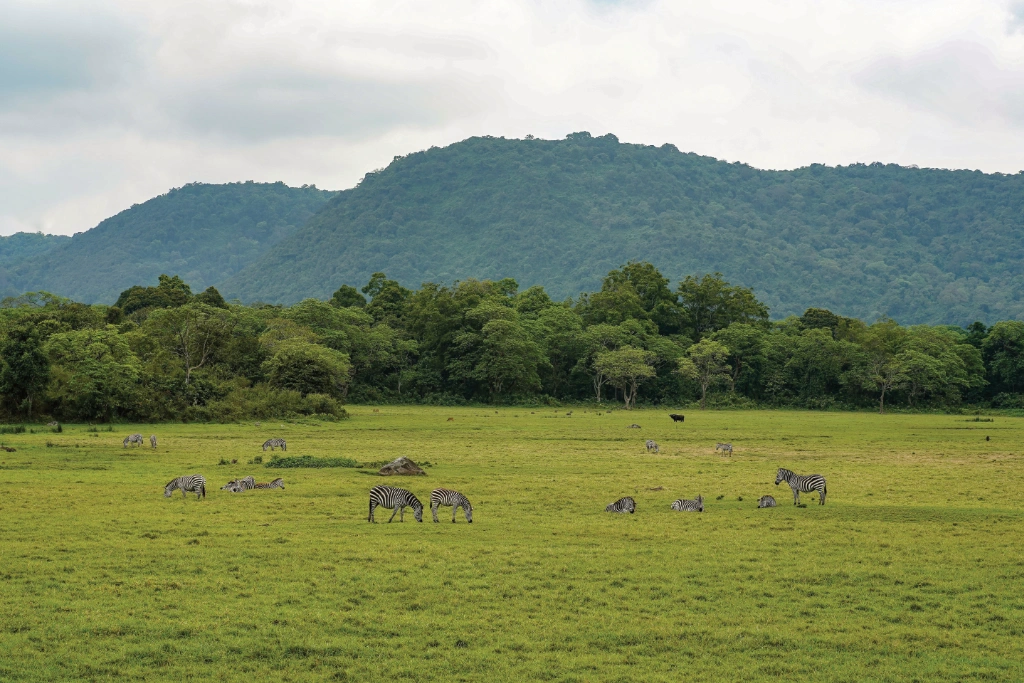
The third African Landscapes Dialogue (ALD) took place at the International Convention Centre in Arusha, Tanzania, on November 12-15, 2019. These four days were filled with intense knowledge sharing, discussion, and networking, providing the 150 participants from 18 African countries with lots of ideas and inspiration when returning to their home countries.
One commitment made in Arusha was to survey the participants after one year to see how they were following up on ideas and commitments made there. Thus an online survey was sent out by EcoAgriculture Partners in November 2020. Despite the challenges of this year due to the COVID-19 pandemic and associated restrictions, ALD participants are positive and have been taking as much initiative as possible. This blog highlights some of their responses.
Applying the Learnings from the ALD
Participants reported having benefitted from the improved knowledge of Integrated Landscape Management (ILM) practices arising from their participation in the ALD. Many participants mentioned that they have learned and implemented how to better coordinate, plan and engage stakeholders at different stages of project implementation, as well as exploring partnership opportunities to better support the communities in different geographical areas. Some mentioned incorporating diverse aspects of ILM in proposal writing.
Advancing the African Landscapes Action Plan
A key outcome of the ALD was the African Landscapes Action Plan (ALAP), phase 3. Some participants reconnected in June 2020 for the virtual FAO-EcoAgriculture Landscapes Roundtable, which hosted seven ALD leaders to discuss the ALAP. The event drew more than 235 participants from 40 countries.
We asked participants about the different ways they have advanced the plan, either in their own landscape or program or beyond. Nearly all of those surveyed (92%) answered that they have advanced the ALAP through strengthened landscape partnerships and governance. For example, the Gomba District Farmer’s Association in Uganda has developed more relationships between district officials, local council leaders, police, and local communities. Other respondents answered that their landscape partnerships have been improved through more efficient involvement of all stakeholders. Another respondent emphasized that the sustainability of integrated landscapes will depend on strong engagement of the local community as the primary users of the landscapes.
20 participants reported that they have advanced the adaptation of land use planning and property rights to strengthen landscape action. Some mentioned that initial steps have been taken but that more sensitization is required. Solidaridad has organized virtual dialogues on land use, helping stakeholders to understand the benefits of land use planning and the direct and indirect benefits to communities. Increased community engagement and user-consultation is ensuring that landscapes are effectively maintained and managed over time.
All surveyed answered that they had increased mainstreaming of biodiversity conservation and climate-smart agriculture through ILM. One landscape partnership provided training on sustainable land management practices and CSA. Imarisha-Naivasha in Kenya is promoting nature-based enterprises in order to protect and conserve biodiversity. The Guluka Kwalala Youth Environment Group in Tanzania is creating awareness among communities to increase forests and trees in the landscape to improve agricultural systems and reduce their impacts on landscapes. KENVO in Kenya is restoring degraded areas to health by adopting farming practices that support not only biodiversity conservation but also climate change mitigation and adaptation.
Leaders of the Horn of Africa Regional Environment Centre and Network, the Southern Rift Association of Land Owners (SORALO) and the Albertine Rift Conservation Society, with EcoAgriculture Partners, produced a joint policy brief on how Integrated Landscape Management can contribute to the Convention on Biological Diversity (CBD) Post-2020 Biodiversity Framework.
While the current crisis caused many plans to be delayed and/or resources to decrease, two-thirds of respondents were still able to undertake some activities to advance business and finance mobilization. Most have worked on strengthening collaboration and networking, bringing investment mindsets into landscape initiatives and creating partnerships with the business communities. Imarisha Naivasha in Kenya is establishing a sustainable landscape fund that can disburse money from various sources.
National Policy
More than two-thirds of respondents have worked to advance national policy for sustainable landscapes. The Guluka Kwalala Youth Environment Group is developing impact indicators on landscapes, involving grassroots communities and presenting evidence to policymakers. Vi Agroforestry Uganda is representing farmer organizations in the committee helping to develop the Ugandan National Agroforestry Strategy. Imarisha Naivasha in Kenya is developing spatial and integrated urban plans to improve landscape management. The plans are aligned with national plans to ensure regional action also has national impact.
One respondent noted that the key to advancing national policy is to have strong political champions, which is presently lacking in his country. Proactive influencing is needed to reshape the policy and legal framework to back ILM and ensure that landscapes continue to fulfill the needs and aspirations of present and future communities of users in an effective and sustainable manner.
Landscape Learning Networks
Though many events and meetings have been postponed due to the COVID-19 pandemic, 21 respondents had still participated in national or regional landscape learning networks or other networking groups. Examples included the organization of a Landscape Learning Forum in Uganda, the Climate Change Forum in Cameroon, national landscape learning sessions in Ethiopia, Green Action Week events in Uganda, and the launch of community seed banks and participation in meetings organized by the national government on natural resources management and climate change in Kenya.
Inputs to the 1000 Landscapes initiative
The 1000 Landscapes for 1 Billion People (1000L) initiative is being organized to strengthen landscape partnerships worldwide through ILM capacity development, a digital platform for easier landscape management, landscape finance innovation and strengthened landscape networks. 1000L participated in the ALD to consult with landscape partnership leaders about their priorities for using information technology and explore their interest in co-designing innovations. Over the last year, 11 African landscape partnerships have contributed to 1000L learning and co-design, including Kiambu County in Kenya, Cape Winelands in South Africa, Umgeni Landscape in South Africa, Imarisha-Naivasha in Kenya, the Mpigi District Farmers Association in Uganda, the Sefwi Wiawso in Ghana, Mpomo in Cameroon, Lake Tana in Ethiopia, Rombo in Tanzania, Bavianskloof and Langkloof in South Africa, Umngeni in South Africa, and Mbeya in Tanzania.