
This year’s Equator Prize winners show that local solutions can help solve global problems. The awards ceremony recognizing local and Indigenous communities worldwide that implement nature-based solutions for biodiversity loss, food insecurity, extreme poverty and the effects of climate change will be held on October 4, 2021.
EcoAgriculture Partners has a longstanding relationship with our UN Development Programme (UNDP) partners at the Equator Initiative, which administers the Equator Prize. Working together since the award’s inception in 2002, EcoAg recognised the importance of providing recognition and resources for local landscape leaders.
“EcoAg got involved from the get-go to promote community initiatives that were good for livelihoods, good for agriculture, and good for biodiversity,” says Seth Shames, EcoAg’s Director of Finance and Policy.
This collaboration still holds for the Equator Prize today. Shames serves as a member of the Technical Advisory Committee, which reviews the prize applications. He explained that winning projects demonstrate both success and strong community leadership. The winners of this year’s prize illustrate the importance of bottom-up, locally based approaches to tackling broad societal and environmental challenges.
But how can local initiatives create a global impact?
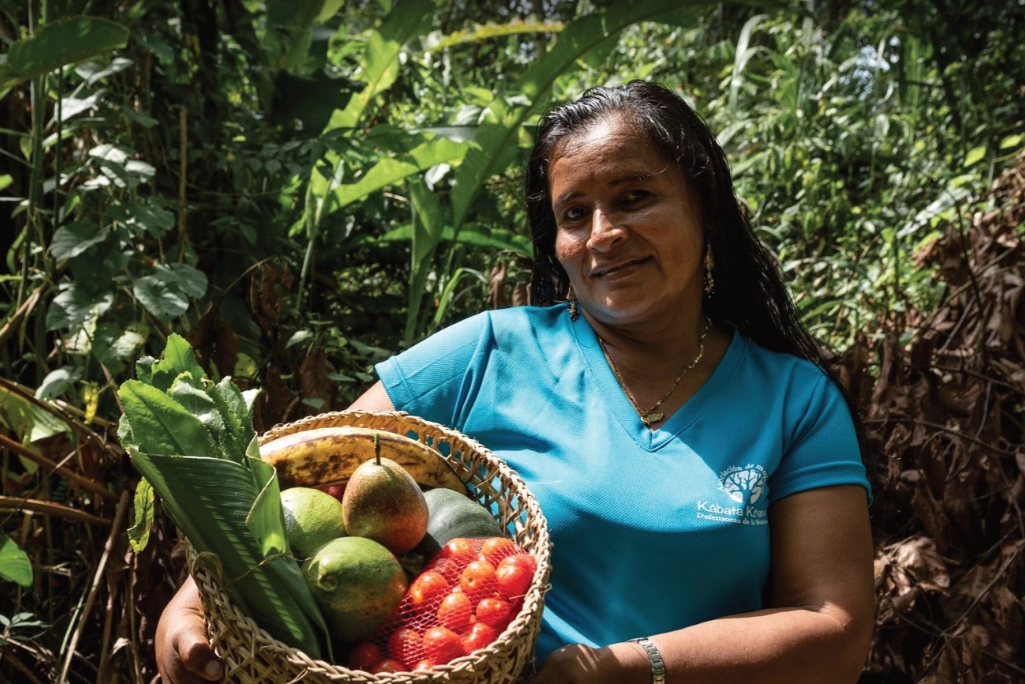
Photo courtesy of Asociación de Mujeres Indígenas del Territorio Cabécar Kábata Könana | Combining traditional knowledge and social media to ensure food security during a pandemic, the Asociación de Mujeres Indígenas del Territorio Cabécar Kábata Könana, in Costa Rica, is a model for community resilience to climate change and other external shocks.
UNDP Administrator Achim Steiner explains how grassroots initiatives can contribute to larger planetary goals. “This year’s Equator Prize winners demonstrate that this transformation is already happening across the globetheir incredible nature-based solutions provide a blueprint to solve our planetary emergency,” he said. “This year’s winners exemplify the kinds of changes we need now, and they provide us with inspiration to follow in their footsteps.”
One Equator Prize 2021 winner shows how a locally led programme can create momentum for national law and policy.
A local group with national impact
Across the Central Asian nation of Kyrgyzstan, farmers are harvesting healthier, better-tasting crops grown using traditional knowledge of local communities. The group spearheading this movement is the BIO-KG Federation of Organic Development.
The centre of BIO-KG’s programme is transforming Kyrgyzstan villages into “organic aimaks,” which follow organic farming practices rooted in traditional knowledge.
Working since 2012, BIO-KG now has 23 organic aimaks where more than 1,000 certified farmers have grown 5,800 tons of organic products. Due to their success, BIO-KG played an integral role in getting the Kyrgyz government to commit to transitioning the entire country to organic agriculture within 10 years.
BIO-KG’s work illustrates the value and impact potential of grassroots organisations in driving systemic change.
Ecoagriculture paves the way
Of the 10 prize winners selected from a pool of 600 contenders, several focus on ecoagriculture and Integrated Landscape Management. These include Niger’s Farmer Union Maddaben of Falwel and Farmer Union Hareyben of Tera, Costa Rica’s Asociación de Mujeres Indígenas del Territorio Cabécar Kábata Könana, and EcoAg’s partner Grupo Ecológico Sierra Gorda IAP in Mexico.
Community-led initiatives like these stand out because of their basis in traditional knowledge, use of multi-stakeholder land partnerships and commitment to regenerating and restoring landscapes. They also embody the landscape partnership approach EcoAgriculture supports.
“We want to show that these types of initiatives can be successful and developed at the grassroots,” says Shames. “Our vision for a better world is one where there are many such initiatives around the world.”
Grassroots catalysts
This year’s prize winners join a network of 255 communities from more than 80 countries that have received the Equator Prize since 2002, according to the UNDP press release. Each awardee receives US$10,000 and the opportunity to participate in events during major UN international assemblies.
Congratulations to all the winners. We are inspired by these landscape leaders whose work demonstrates solutions needed to address the world’s most pressing challenges.